

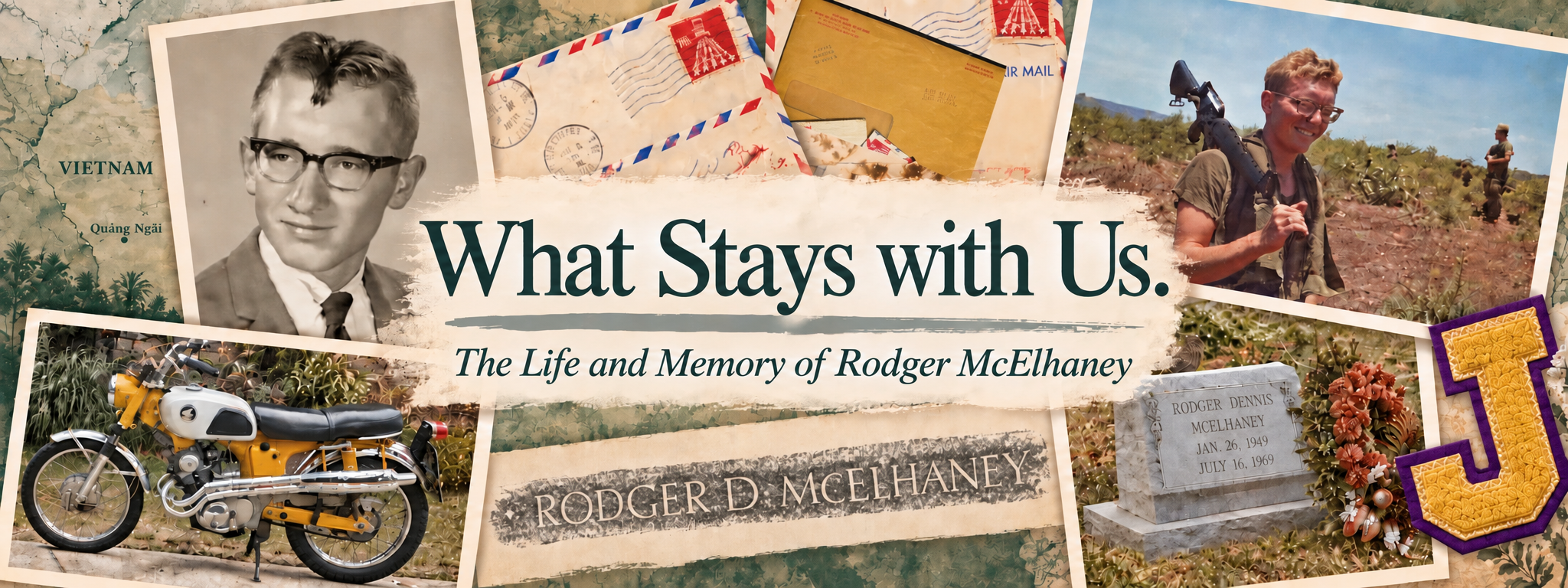
PFC Rodger D. McElhaney
-Vietnam War-
Introduction
This digital exhibit presents materials about Rodger McElhaney, PFC, US Army.
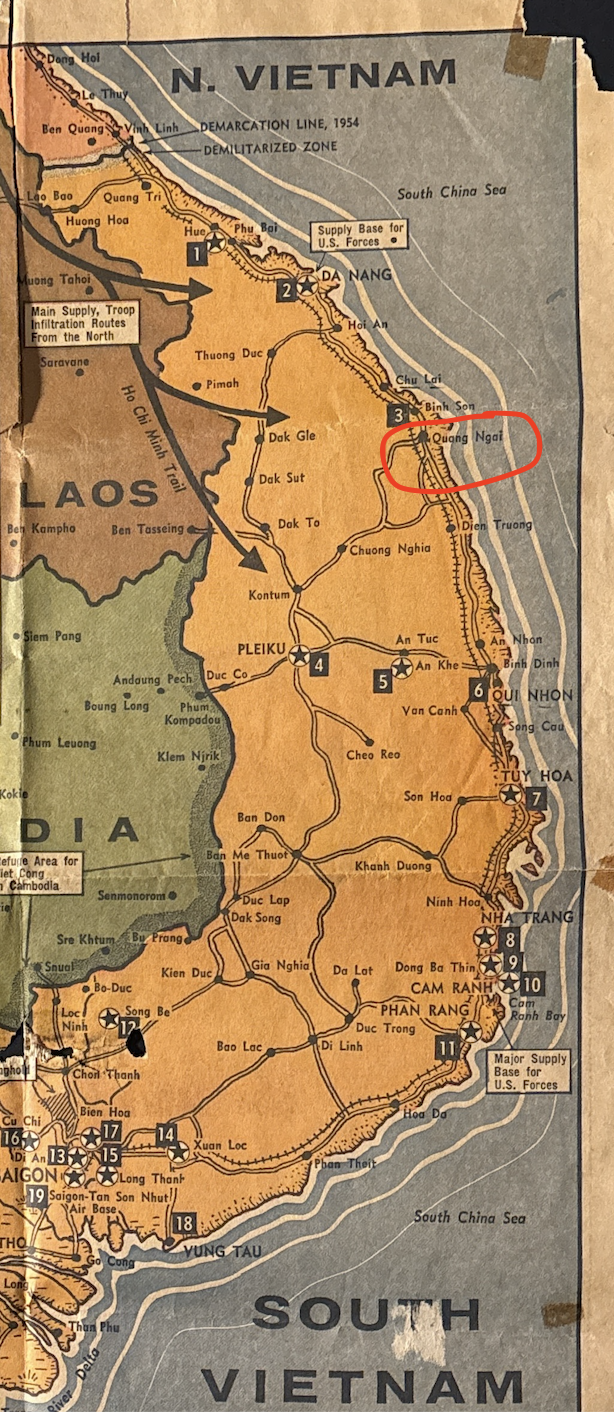
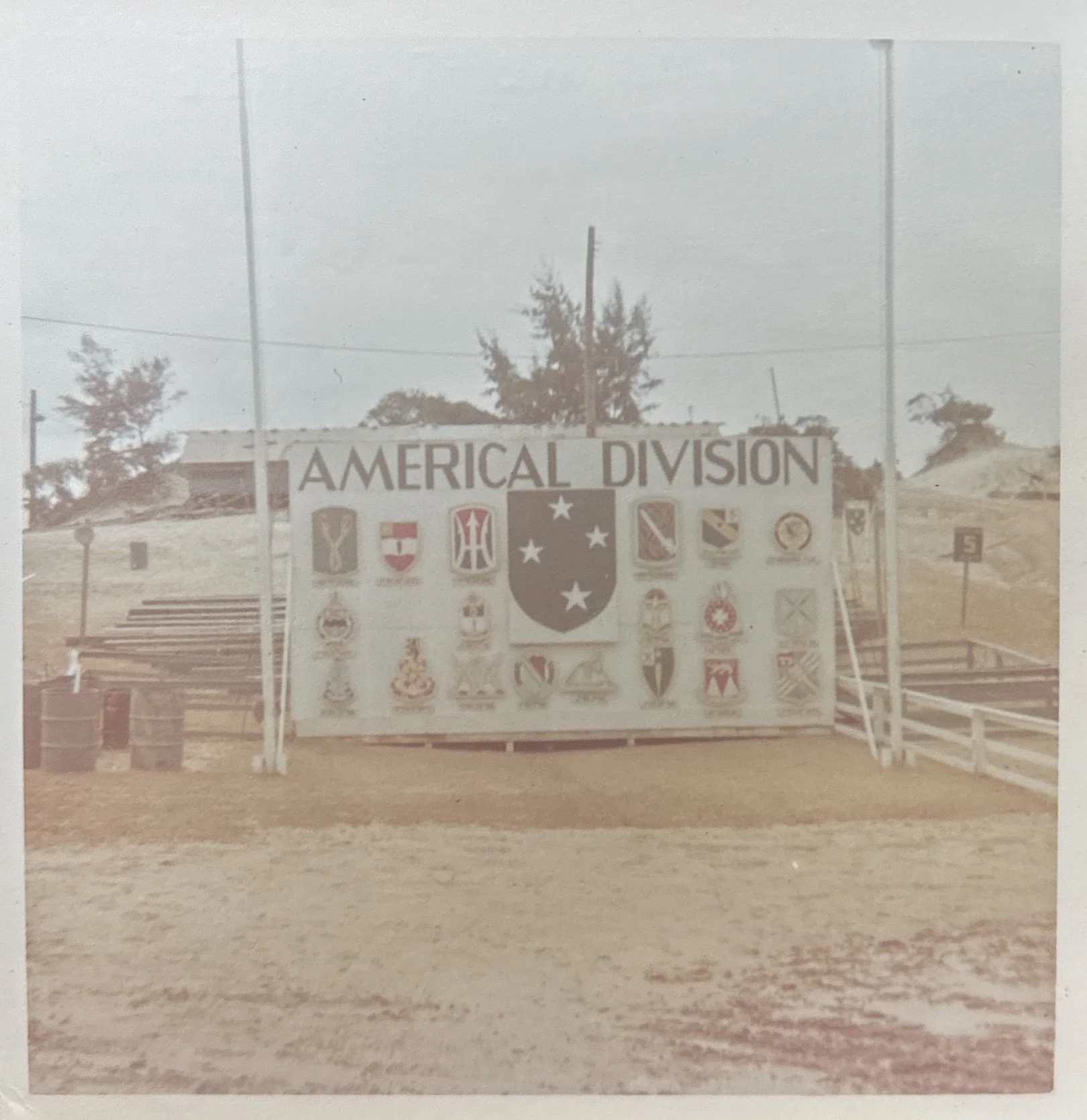
Rodger grew up in Jamestown, PA. He was drafted into the Army and served in Alpha Company, 5th Battalion, 46th Infantry, 198th Light Infantry Brigade, Americal Division. He was killed in action on July 16, 1969 when his unit came under attack during a search and clear operation. The unit was hit by enemy rocket propelled grenades (RPG) near the My Khe village in the Quang Ngai Province of Vietnam.
Materials appearing in this exhibit are from the Rodger McElhaney Collection, held by his sister, Carol Babcock (née McElhaney). Reflections throughout the exhibit are adapted from an interview with Carol, August 25, 2026.
Key Dates
Born: January 26, 1949
Drafted/Bootcamp: September 12, 1968
Arrival in Vietnam: January 3, 1969
Killed in Action: July 16, 1969
Map, The Youngstown Vindicator, 1967 March 12.
Americal Division photo, taken by Rodger in Vietnam, 1969.
What Stays with Us…from Childhood.
“He was a soft, quiet boy. He never gave anyone any trouble.”
Rodger’s childhood took place in rural Jamestown, PA.
His father, Herbert, was a school bus driver and later a truck driver. His mother, Elizabeth, was a homemaker. There were four other children in the McElhaney family: twins Carol and Carl, son Kevin, and daughter Beth.
Rodger wrestled at Jamestown High School, earning a Varsity J letter.
Like many local Jamestown kids, Rodger worked at Pymatuning Deer Park all through school. He enjoyed working there because he could walk to work from the McElhaney family home.
Additionally, Carol remembers that Rodger loved to hunt and that he liked working with his hands.
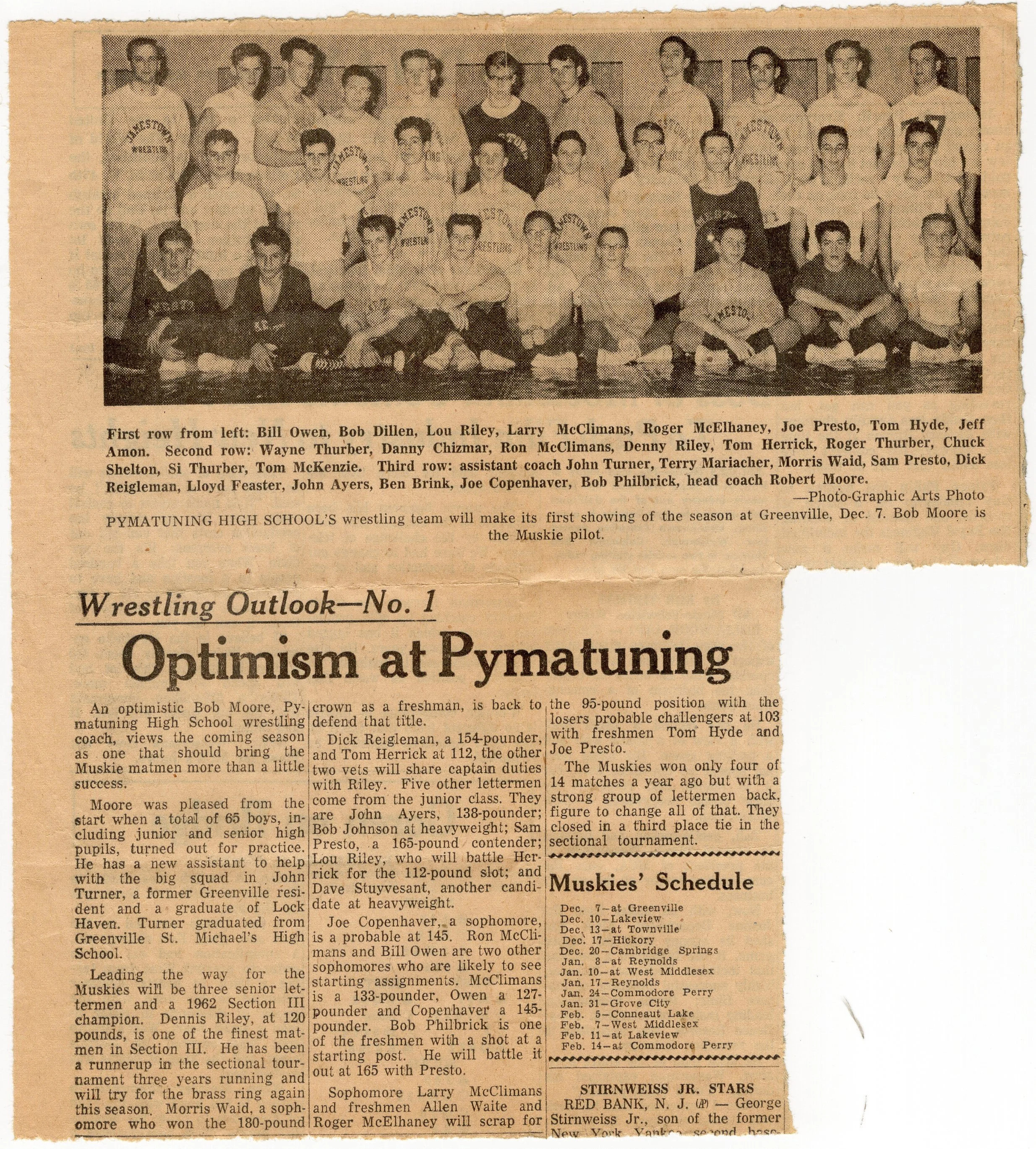
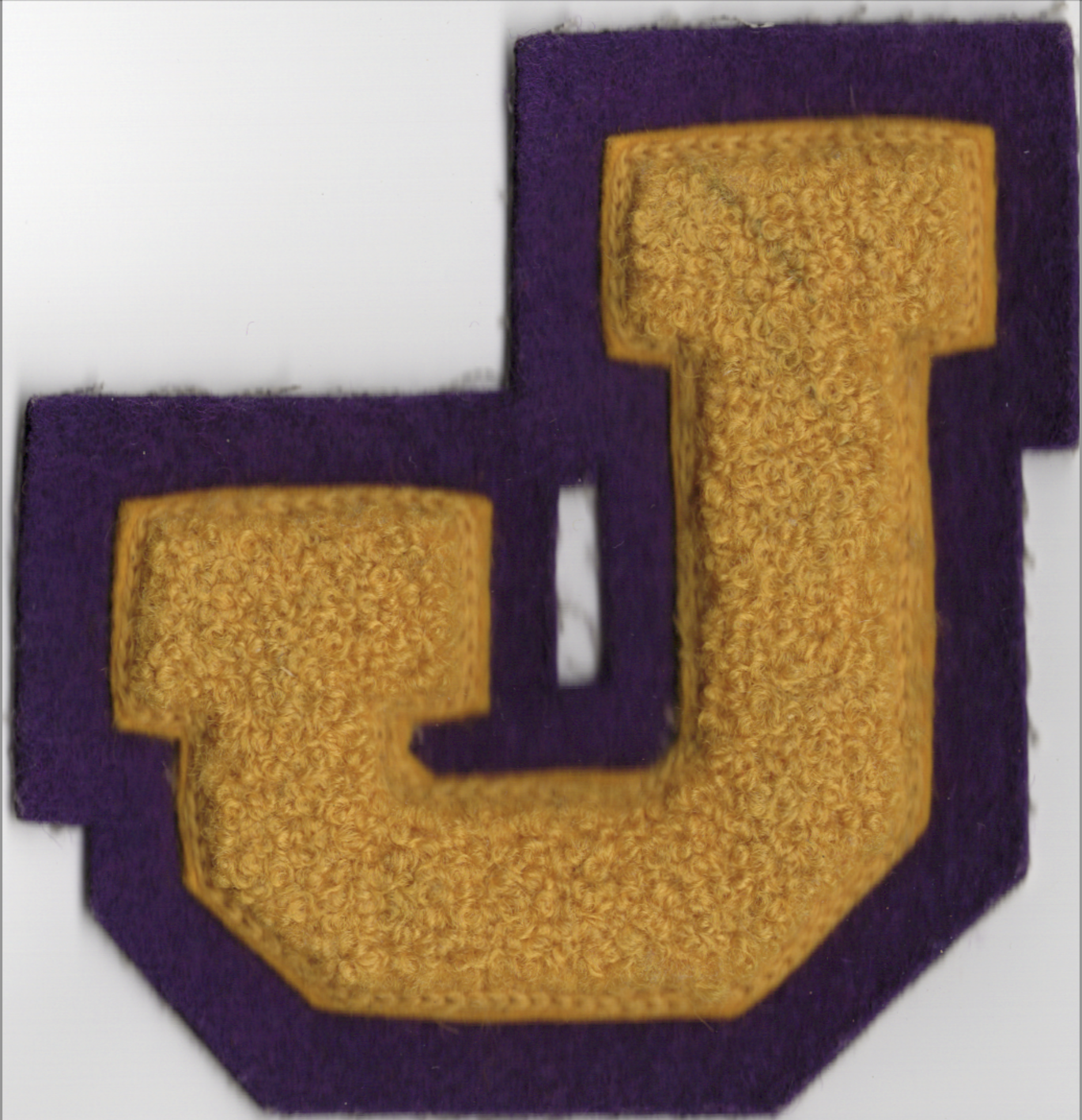
Article, The Record-Argus (Greenville, PA), 1962 November 29. Artifact: Rodger’s Varsity J.
“Rodger had a habit of stomping. One time we were playing jacks and he accidentally stomped on a jack because he got mad. I don’t think he ever played jacks again after that!”
A favorite childhood memory of Rodger shared by Carol.
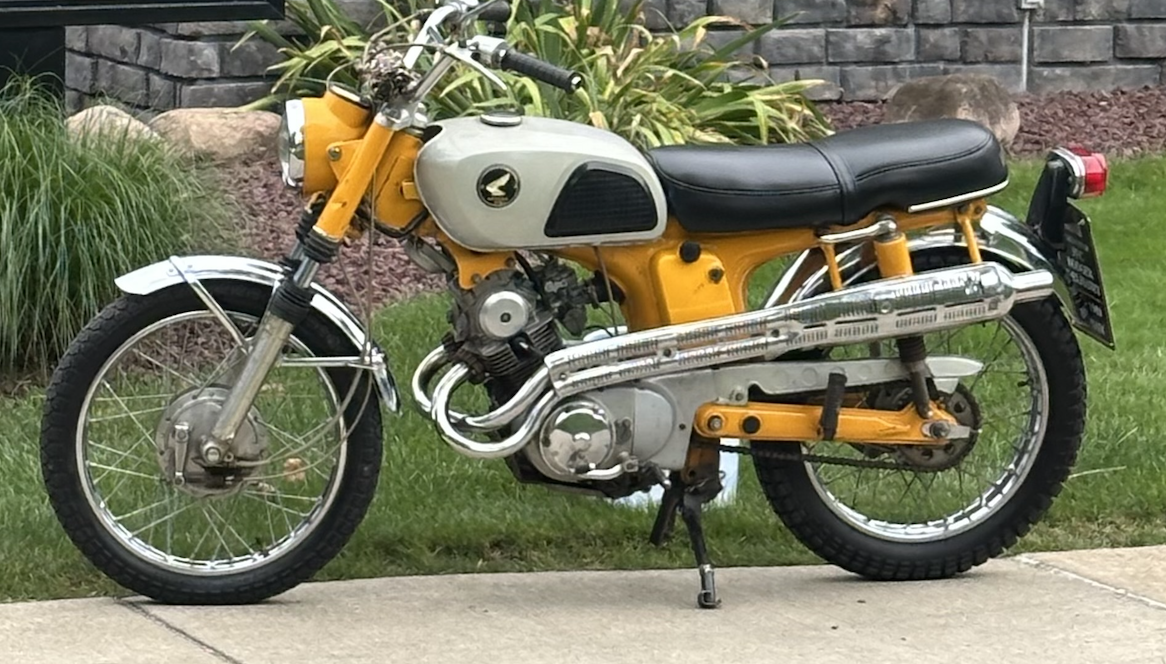
Rodger’s family recalls the thing this quiet, country boy loved most: his motorcycle.
Photo: Rodger’s motorcycle. Taken by Katie Wagner, 2026 September 12.
“When Rodger was drafted, of course the family was worried, but they all said how Carl came back safe. I said, ‘but Rodger isn’t Carl. He’s a different type of person. Quieter.’”
What Stays with Us…from War.
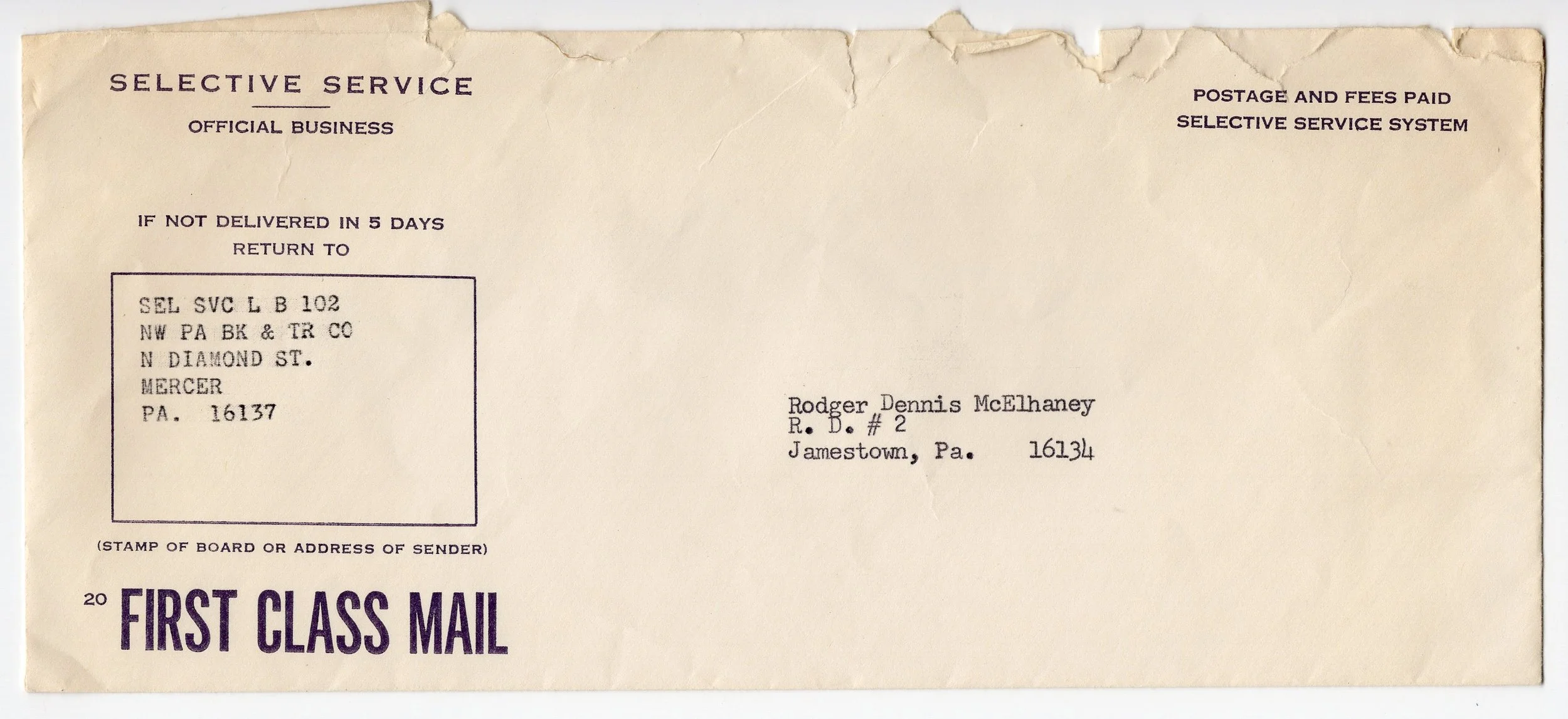
Carol recalls the memory of the McElhaney family finding out Rodger had been drafted and how it felt different from when her twin, Carl, had been called up.

Rodger’s Statement of Acceptability into the Armed Forces, 1968 June 12.
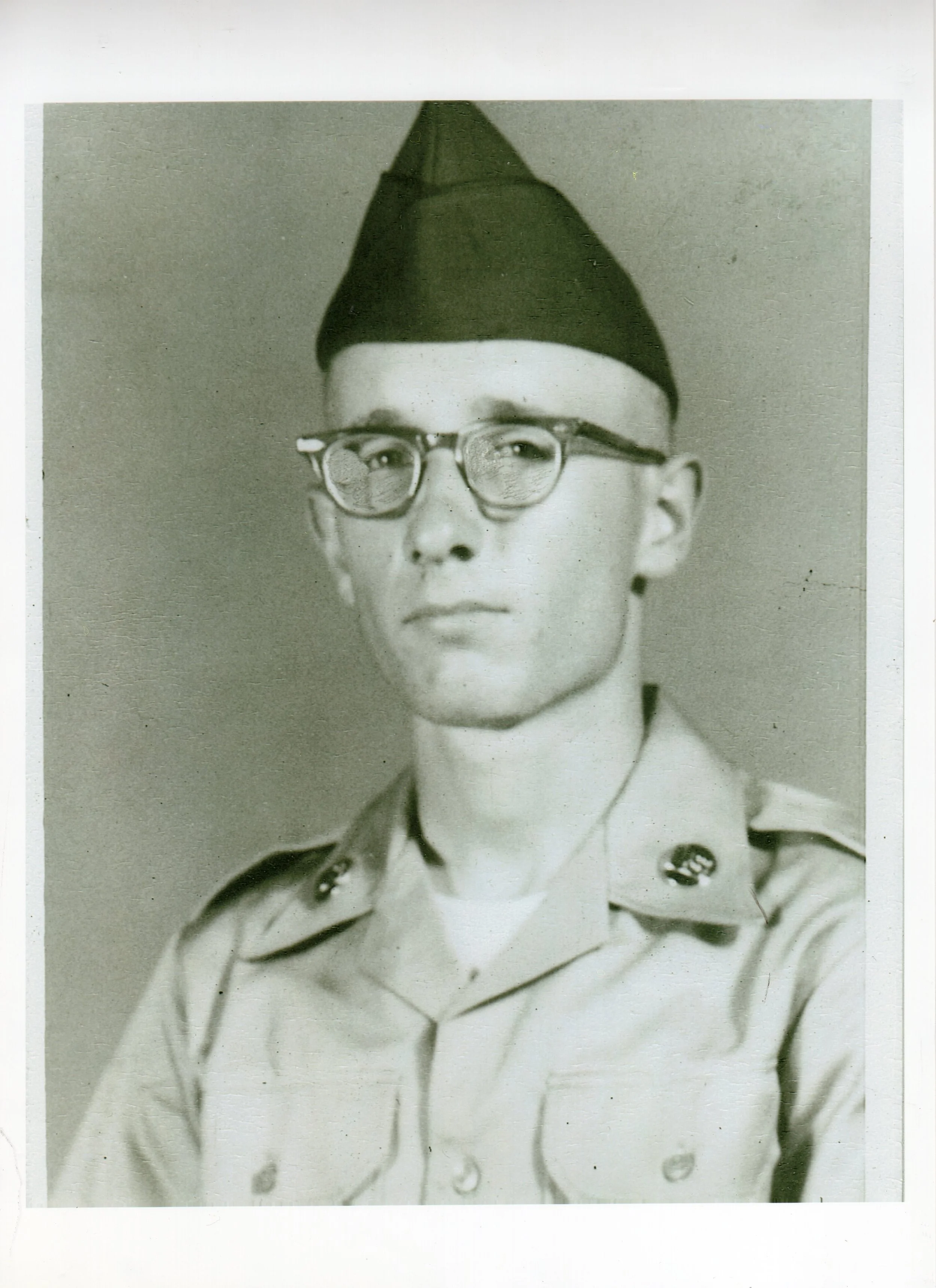
Rodger’s official Army photo, likely 1968.
Rodger wrote many letters back home while in training at Fort Jackson, SC. He wrote both to his parents, and to Carol and her husband, Ron.
The letters reveal Rodger’s lighthearted and caring nature. He requested his mom take out enough money from his bank account to have six weeks of the local paper (The Record-Argus) sent to him. He asked Ron to find out about the start of hunting season, since he would be coming home for Christmas.
He always asks about Carol’s and Ron’s jobs and their kids. He offers to send money back home, as well as buy some fatigues for Ron. He joked about which color Ron wants, “olive drab or olive drab,” and said that if he gets the whole set (pants and shirt), he’ll have to salute the flag.
He shares details about Army life, like having to re-clean floors after an inspection because the sergeant didn’t like them, or how a chicken dinner at a cafeteria in town is better than the food in the mess hall (but it “wouldn’t compare with mom’s“), and that he was proud of himself for qualifying Expert in shooting; one of only 15 to do so in the 50 man platoon.
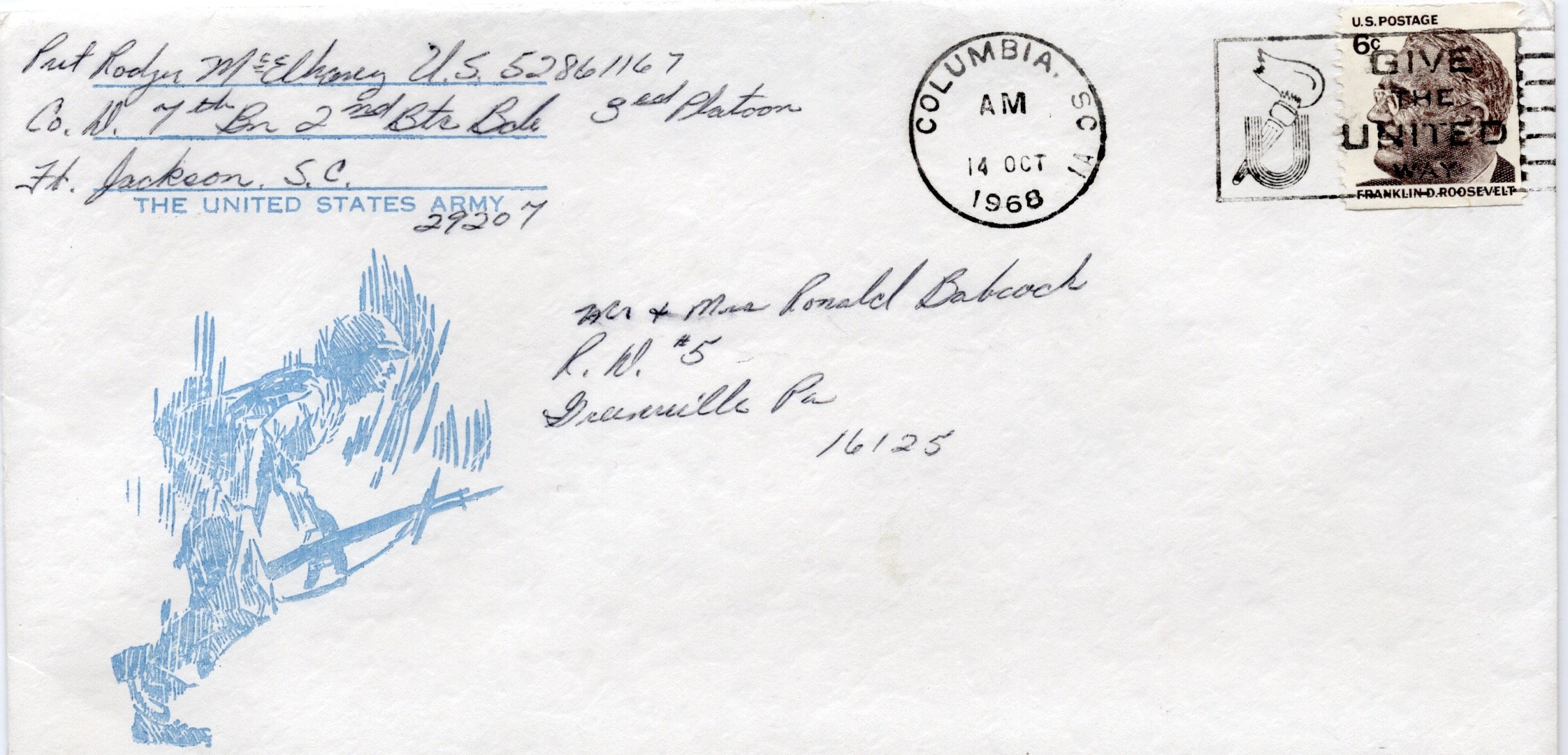
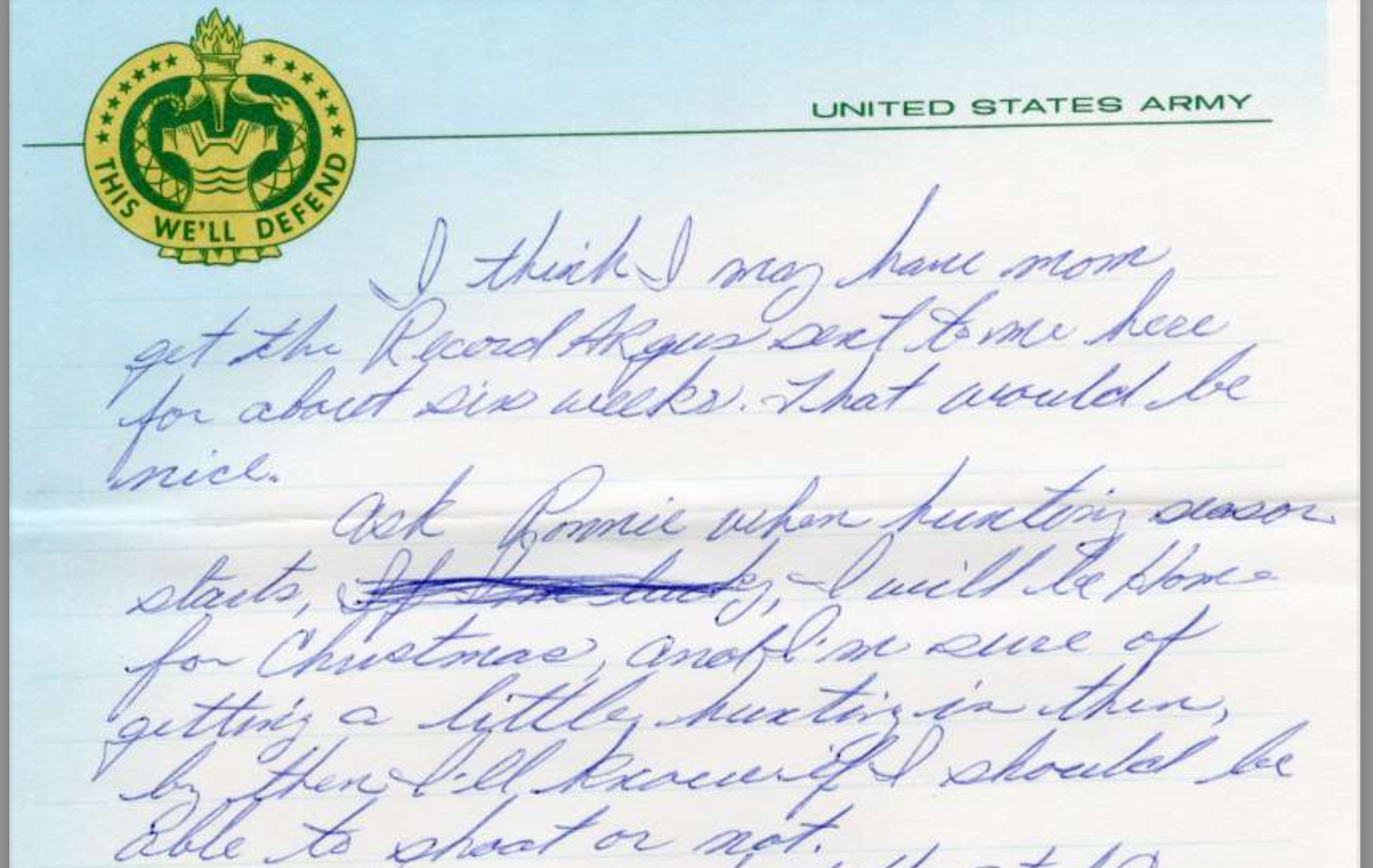
Excerpt from letter dated 1968 September 30.
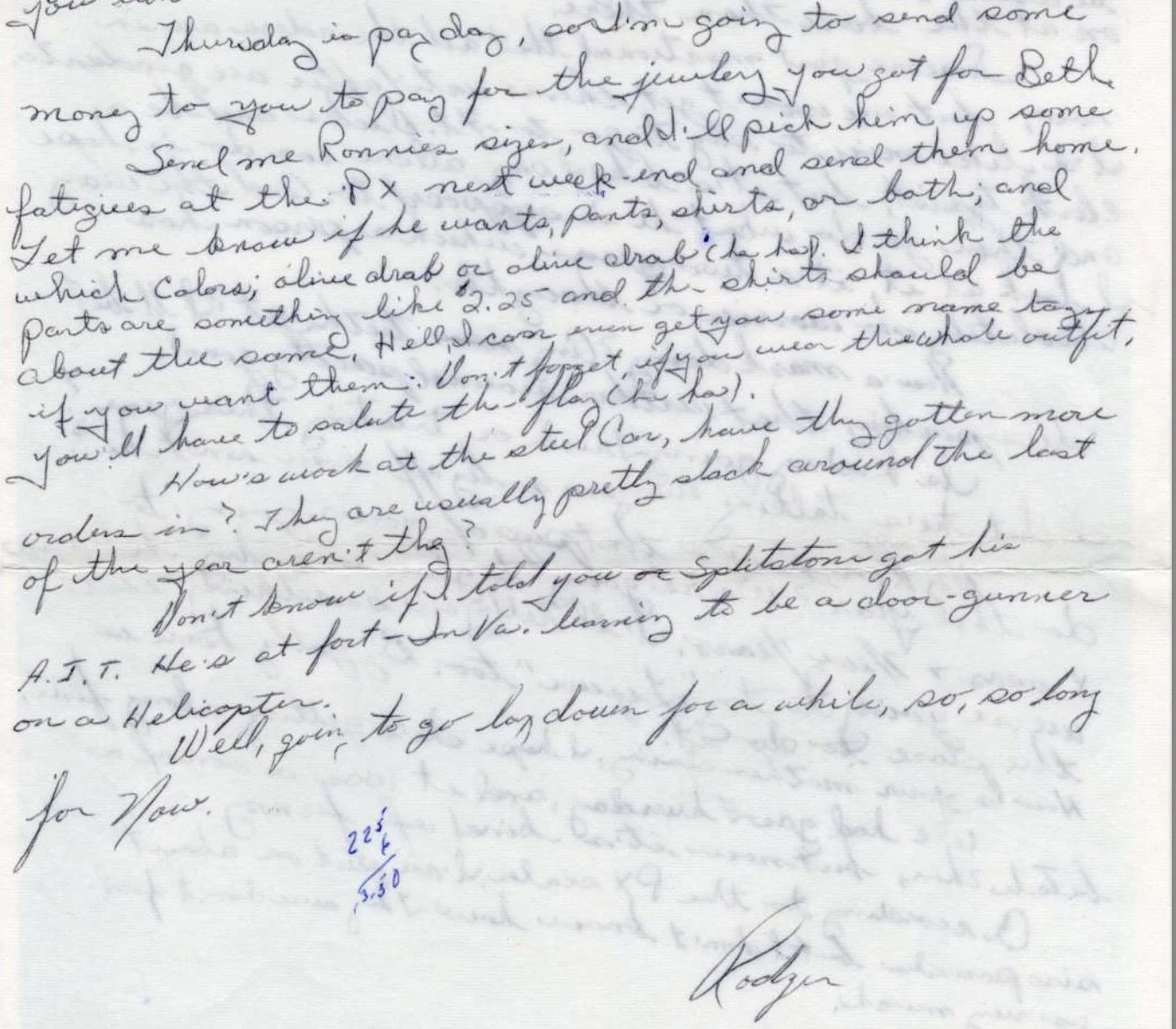
Excerpt from letter dated 1968 October 27.
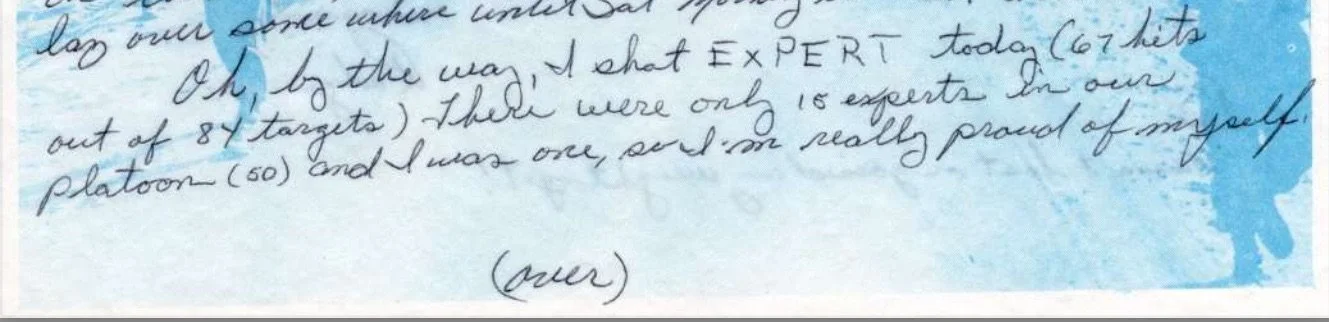
Excerpt from letter dated 1968 October 23.
“I was so nervous the night he left. He looked me right in the eyes. He didn’t say anything.”
Rodger was granted holiday leave from his training command. He got to spend Christmas with the McElhaney family.
Carol recalls life being busy with Ron and their two young children while Rodger was home on leave, but she fondly remembers spending quality time with him at their childhood home that visit. Everyone played games together (not jacks!) and had a fun time.
The joy of his visit was short-lived. Upon his return from leave, it was back to reality, and not long after that, over to Vietnam.
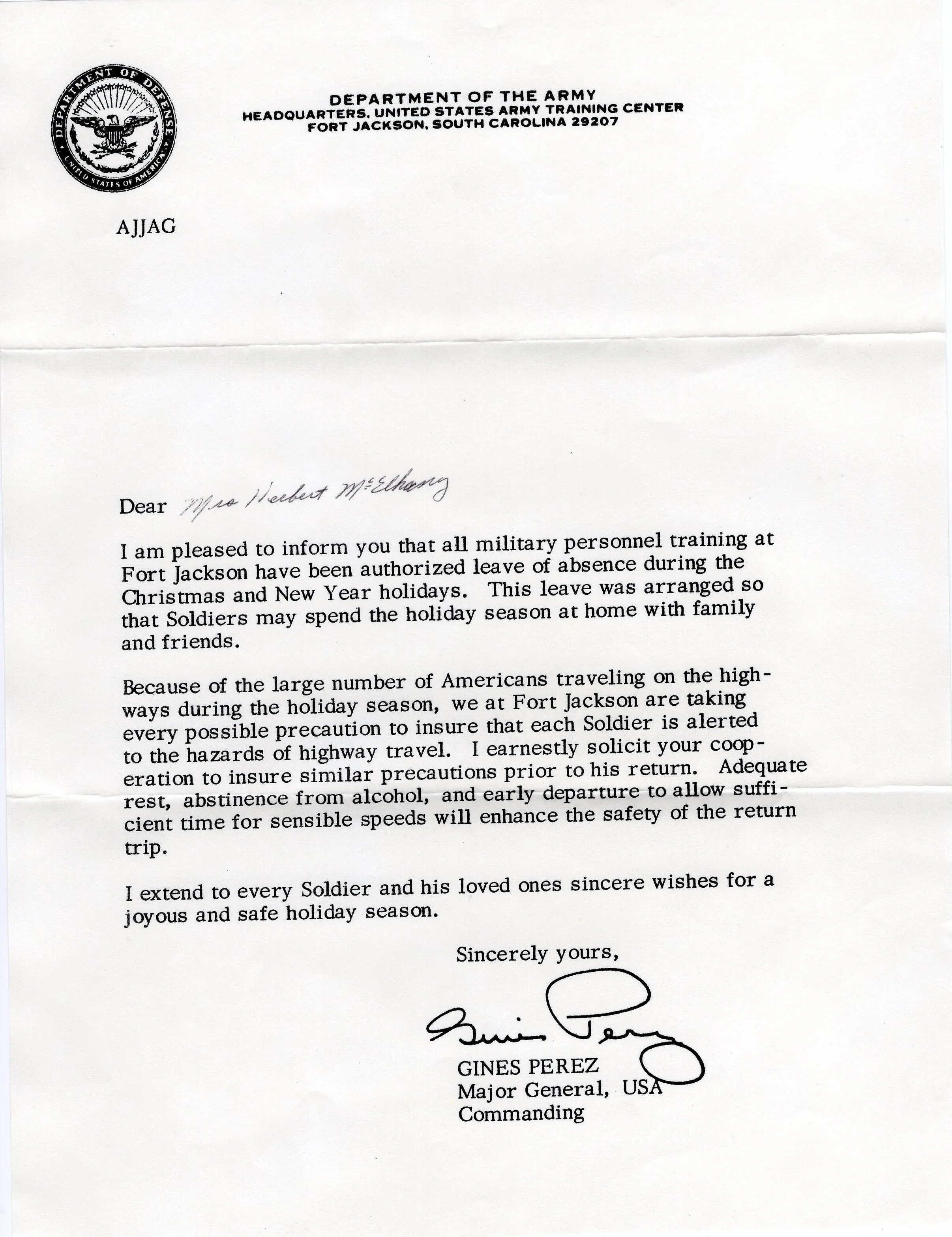
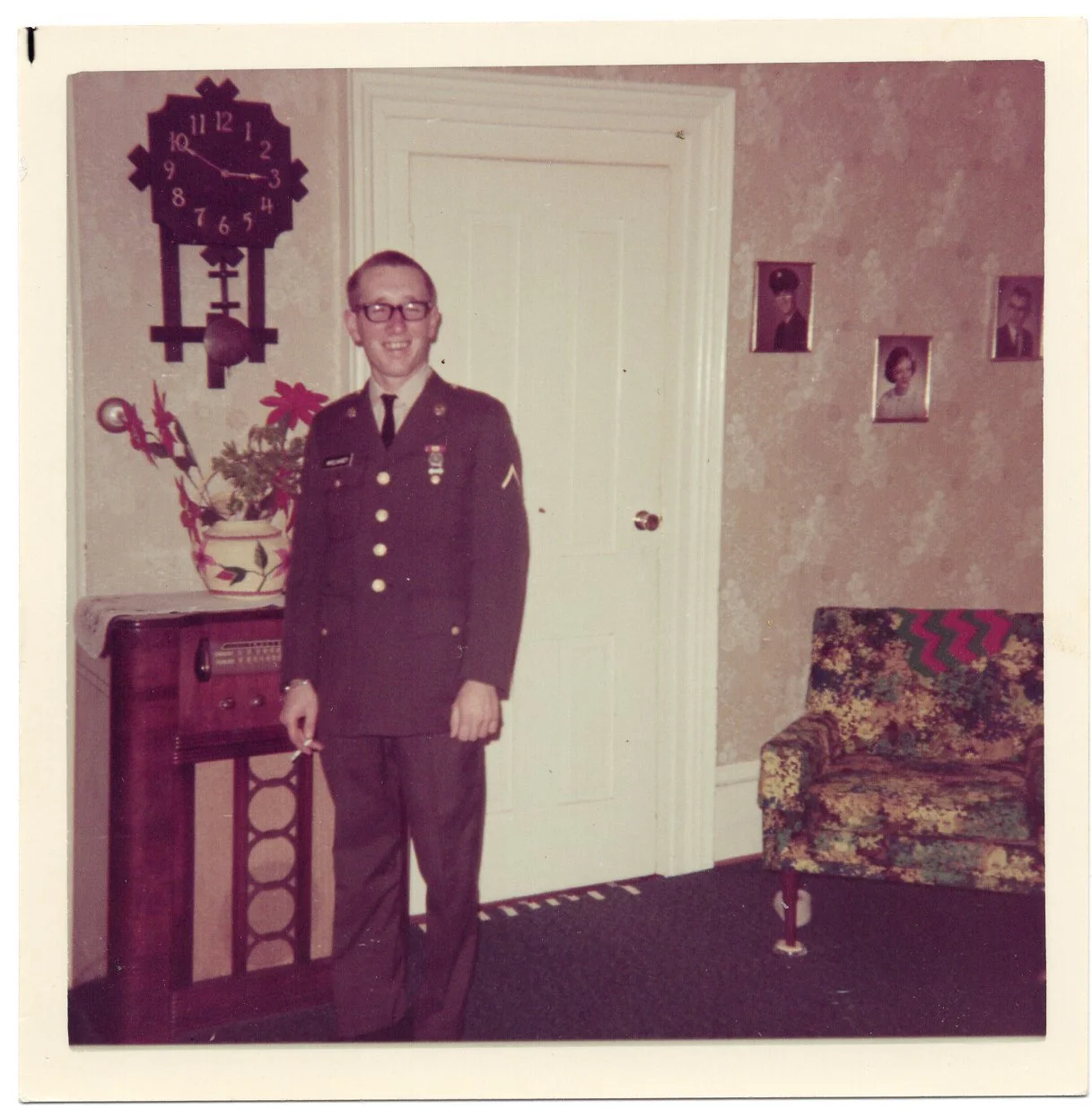
Letter authorizing leave, 1968. Photo of Rodger at home during holiday leave, 1968 December.
“Life went on...but with constant worry.”
Letters to and from home continued while Rodger was in Vietnam. They really demonstrate how close the relationship was between him and his sister.
The letters are filled with questions about family, about home, and about what kinds of gifts he should buy for special occasions. They are also filled with sentiments of sadness for having to miss those same special occasions. Many letters talk about the food, his surroundings, requests for things from home, about putting aside money to buy a bigger motorcycle when he got home, and about cigarettes (or the lack there of). Much of the lightheartedness from the Fort Jackson letters has dropped off, but the caring nature is still present.
Also present are tales from the front lines. It is understandable why Carol could not shake the worry that had plagued her since the night Rodger had to return from leave.
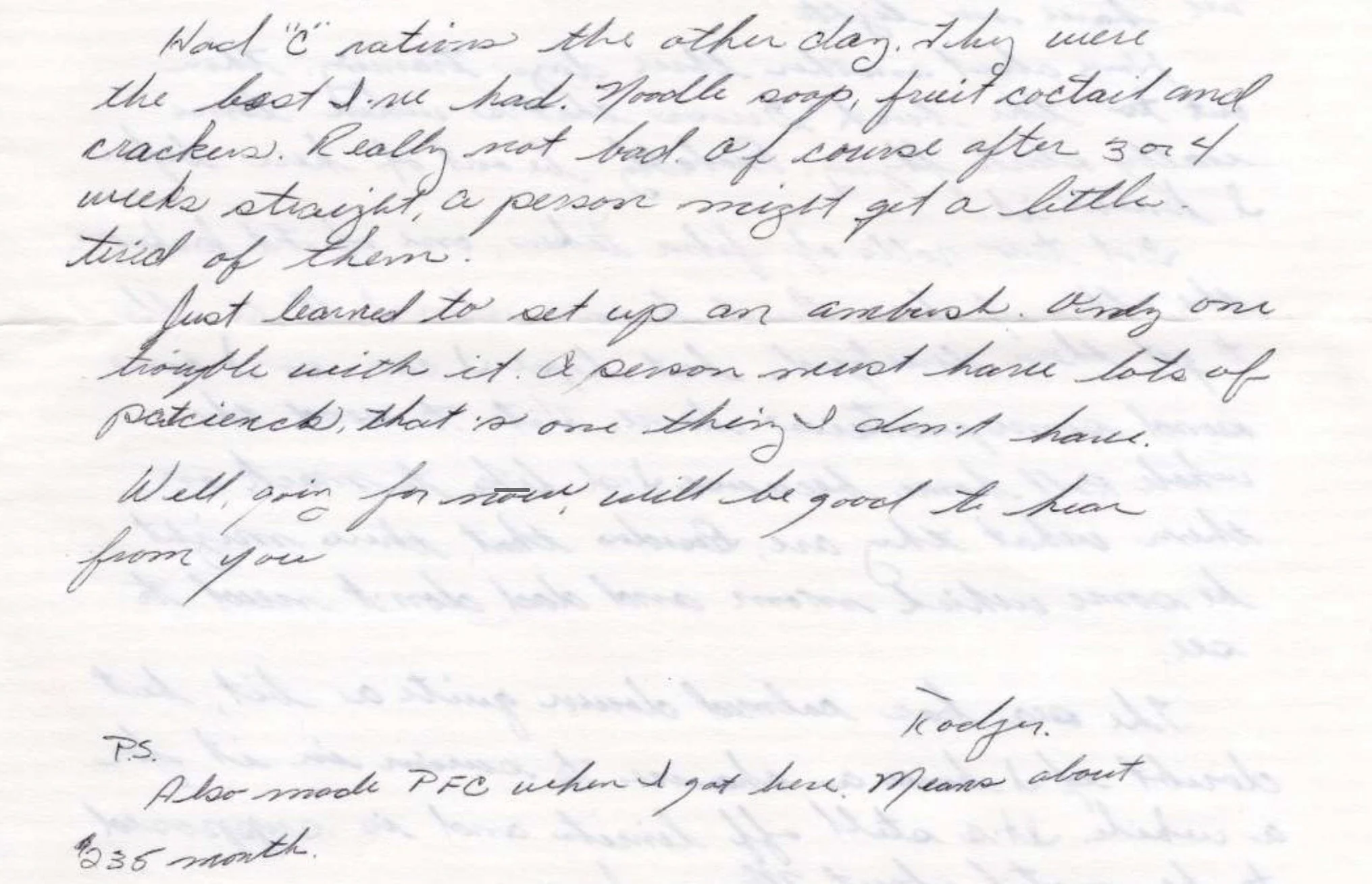
Excerpt from letter dated 1969 February 7.
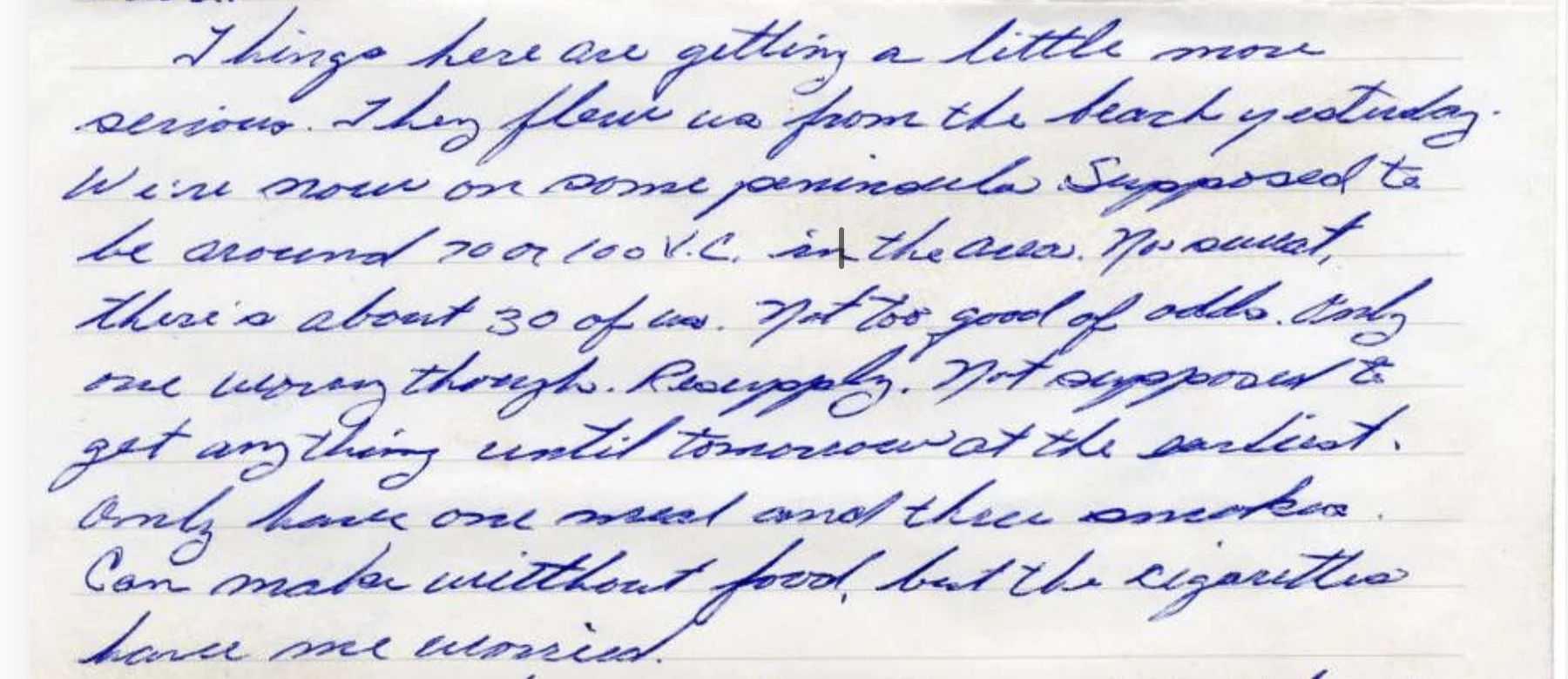
Excerpt from letter dated 1969 February 11.
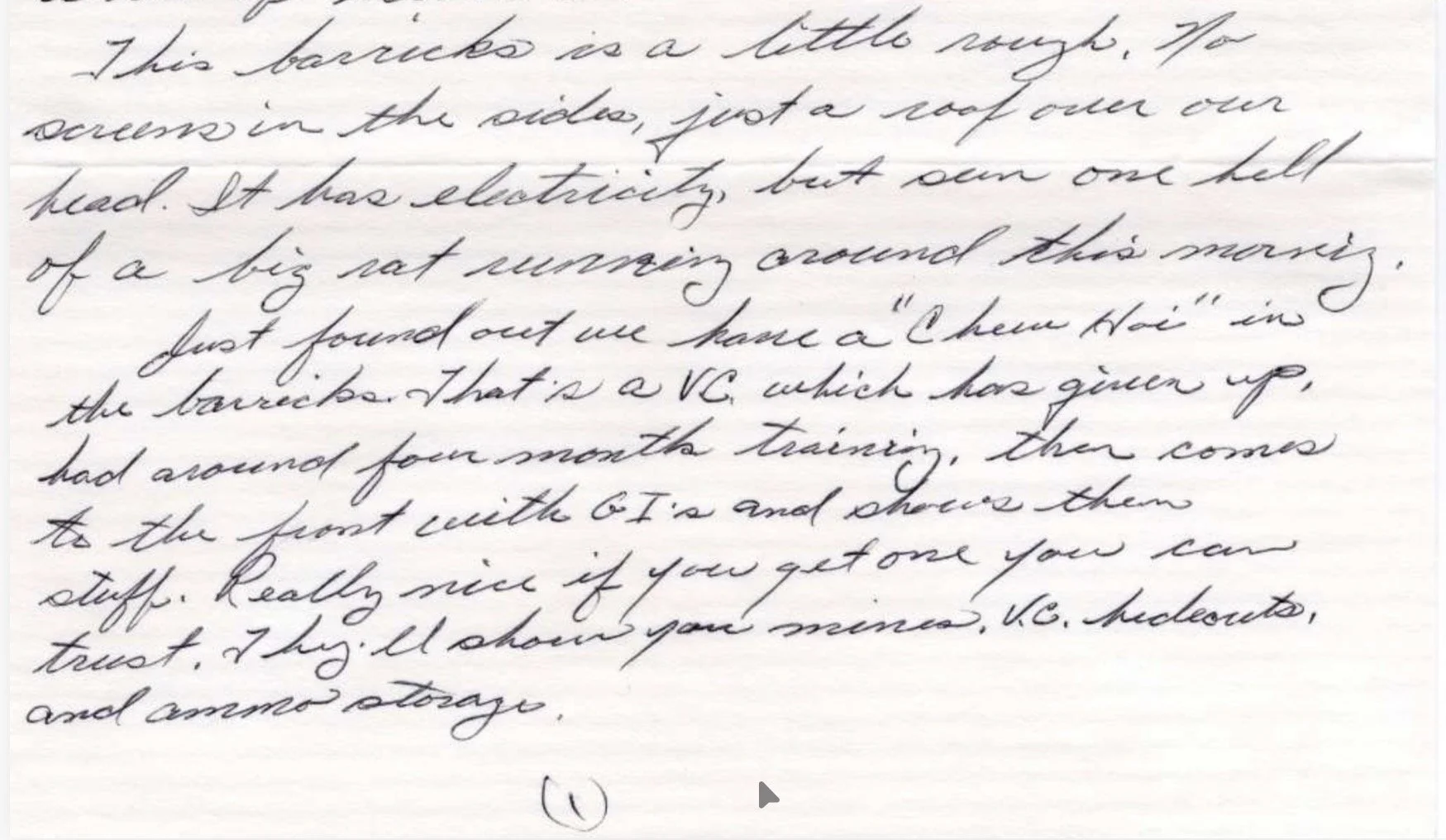
Excerpt from letter dated 1969 February 20.
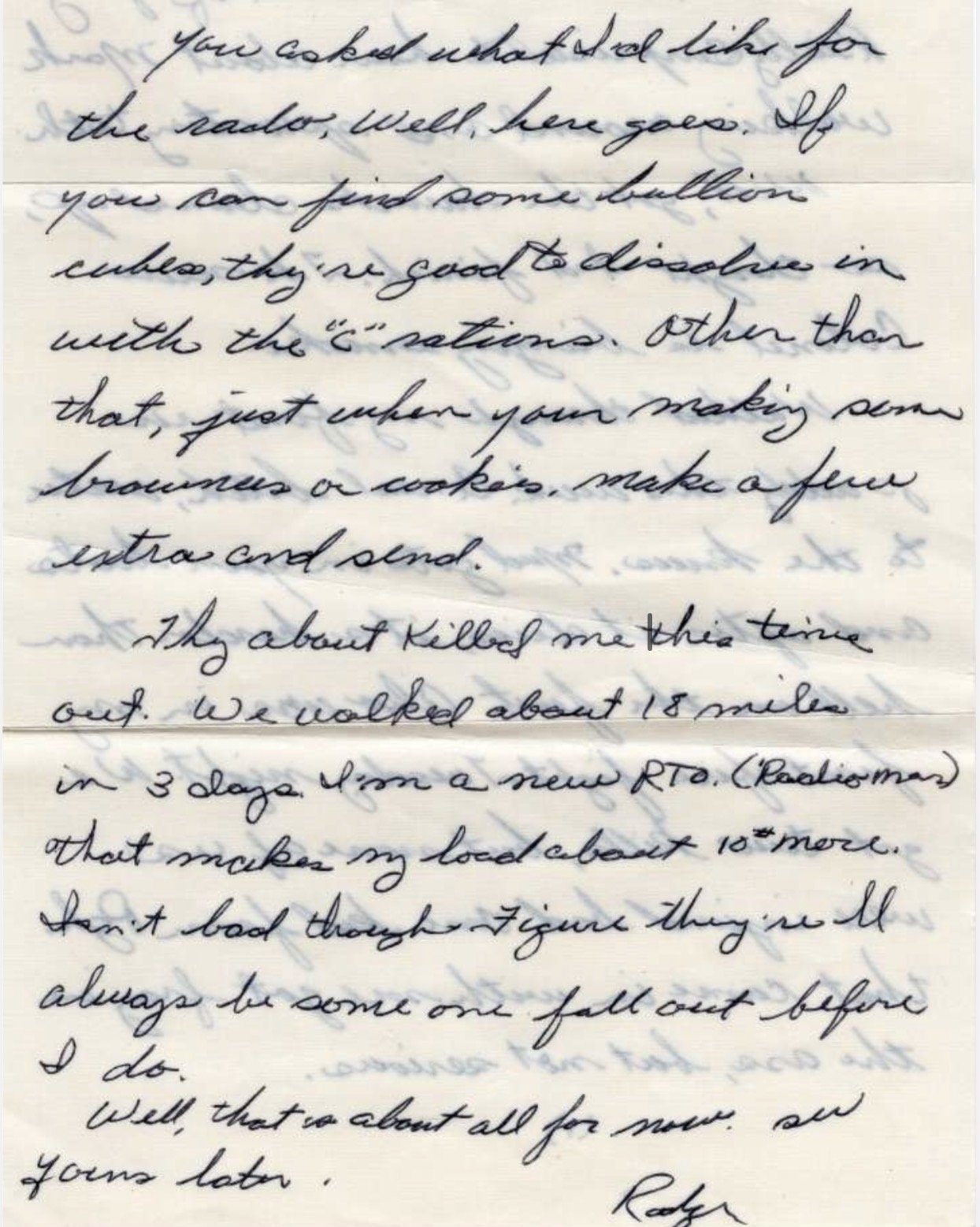
Page from letter dated 1969 March 21.
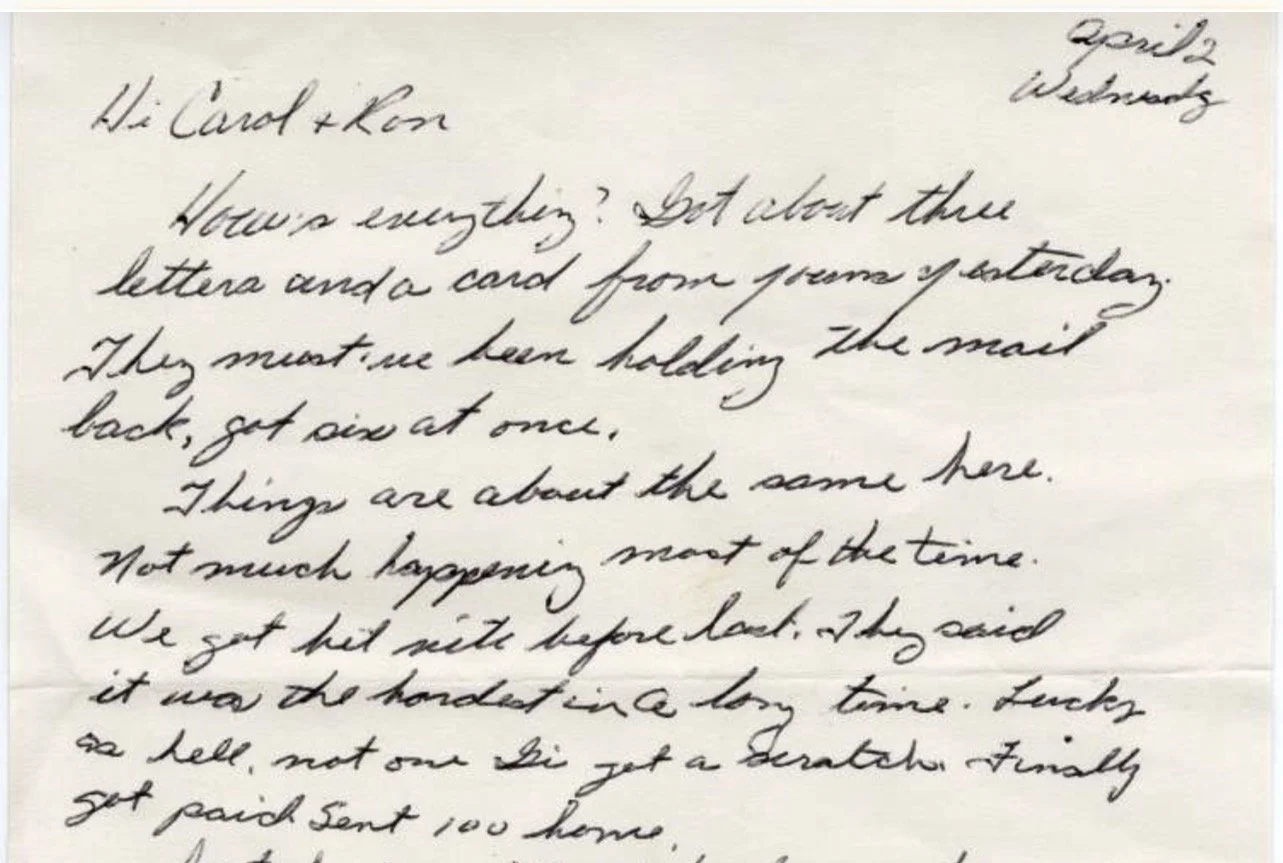
Excerpt from letter dated 1969 April 2.
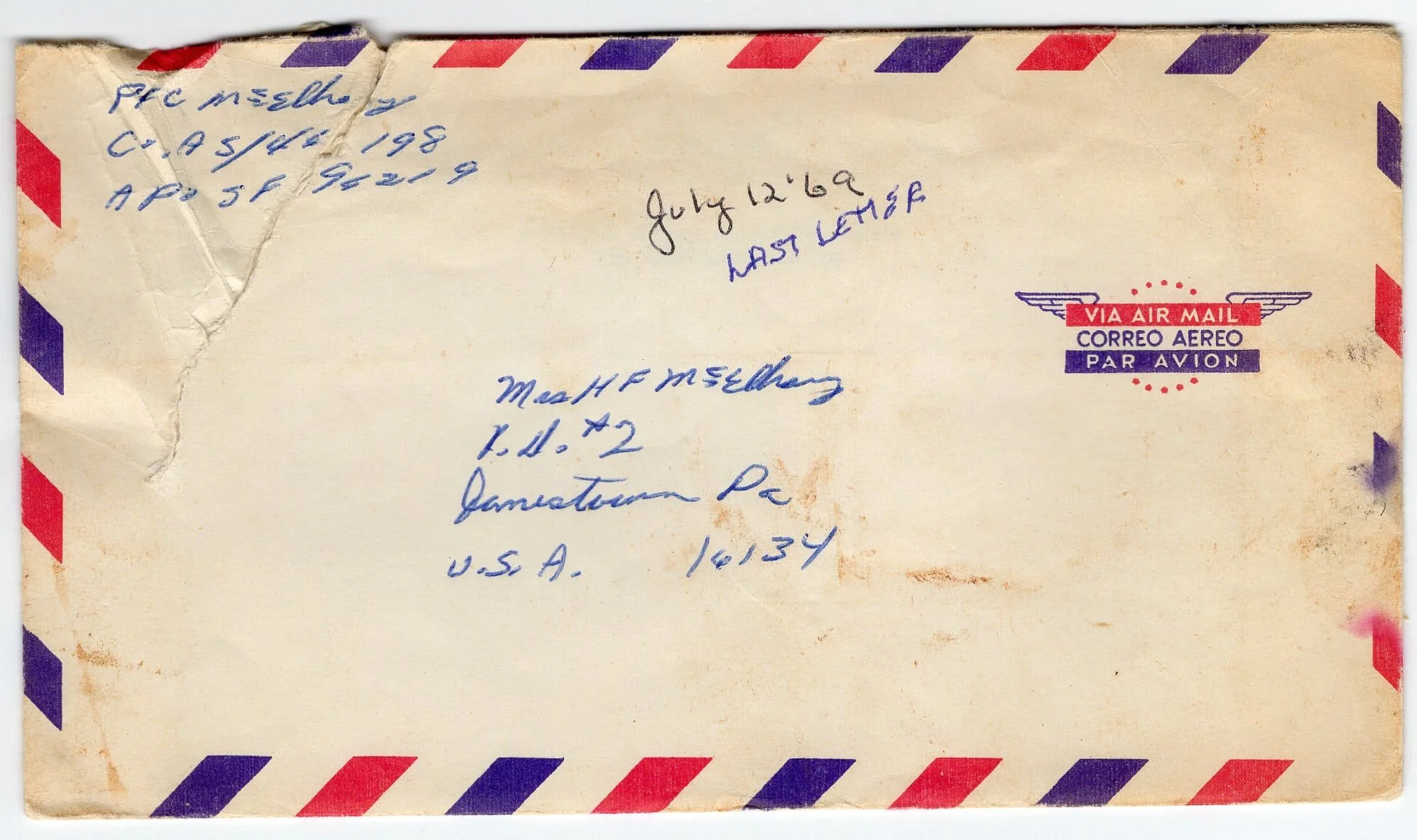
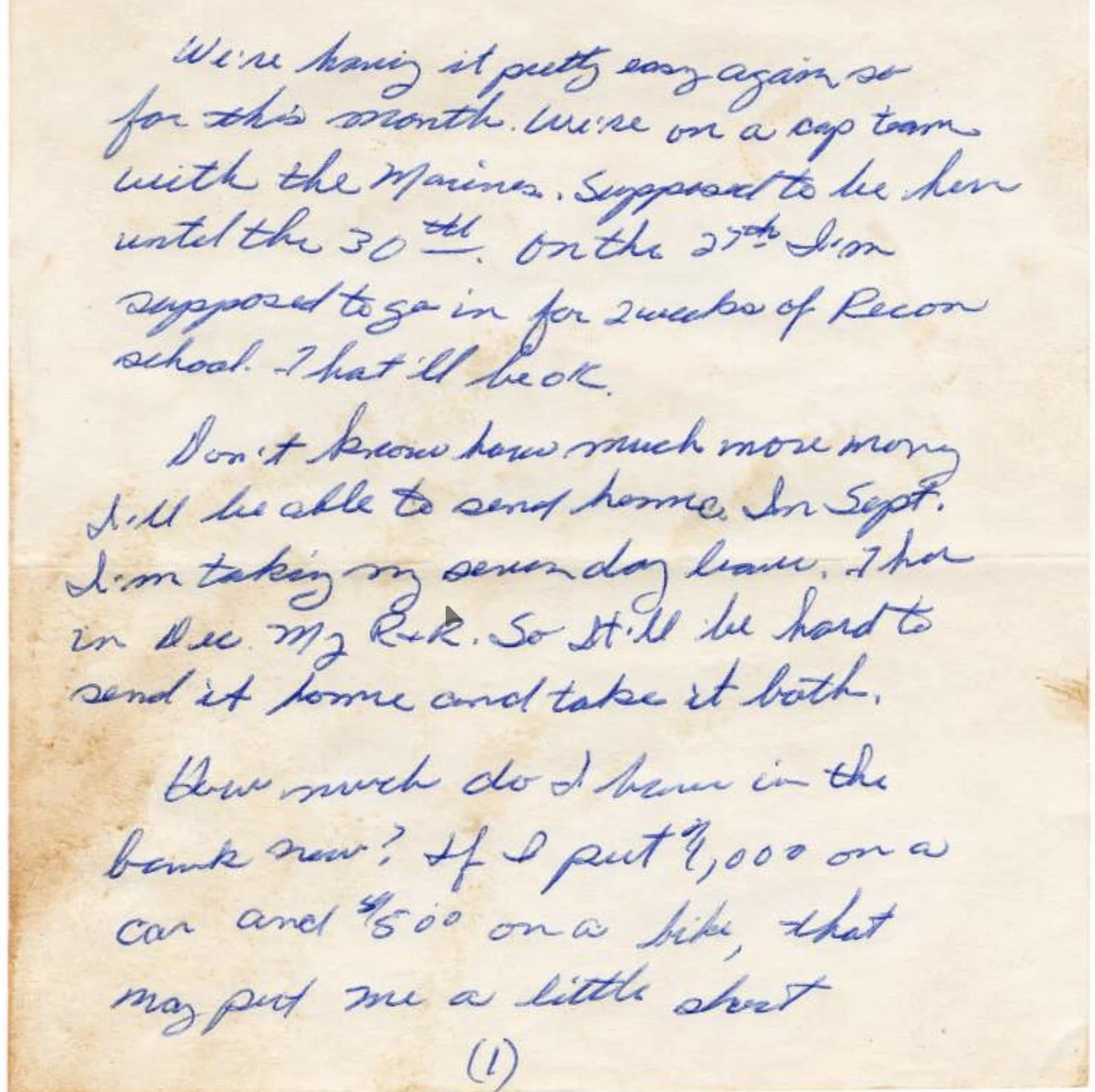
Envelope and page from letter dated 1969 July 12.
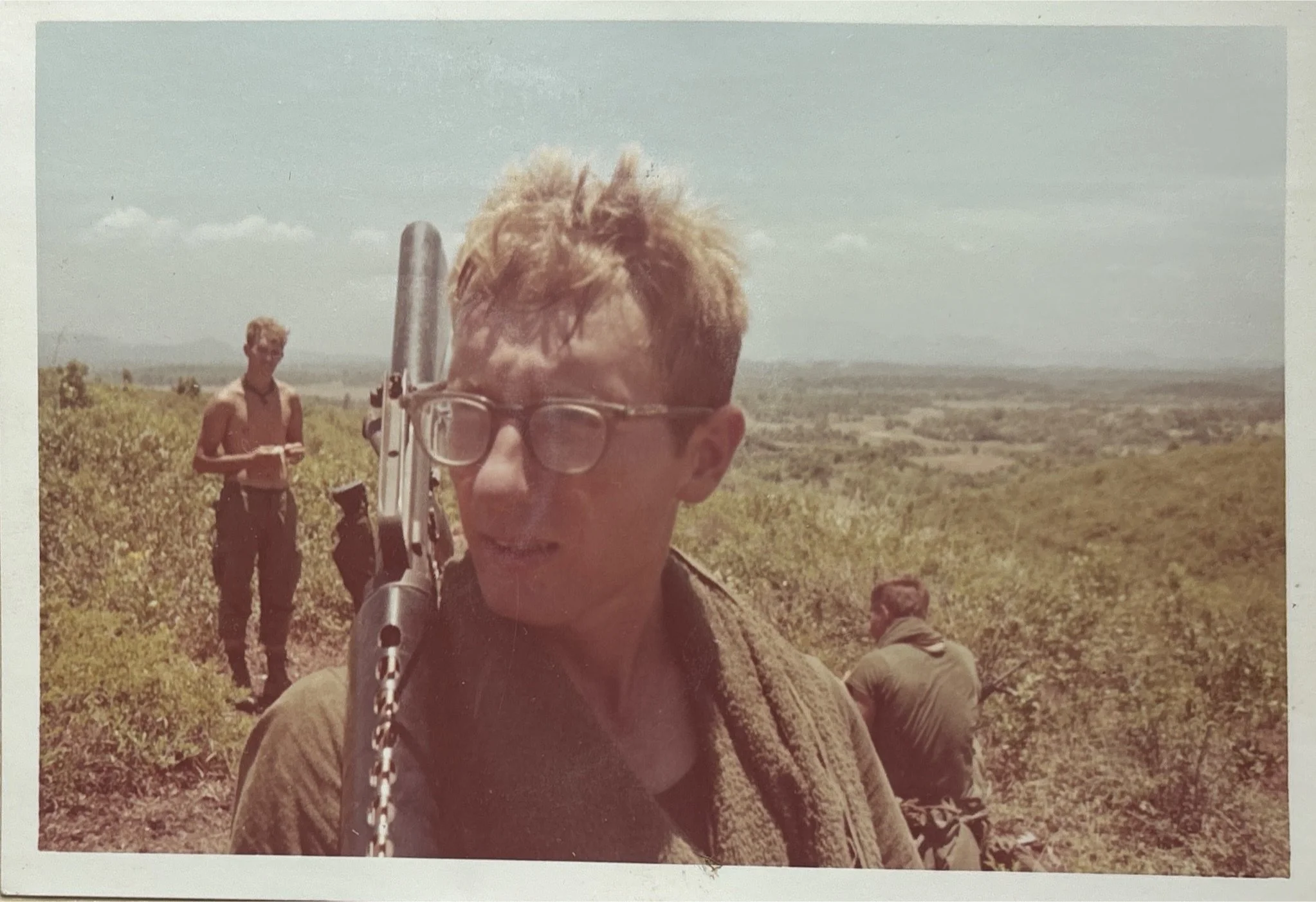
“He was a great guy and soldier, and a kind person. Even though I have to admit I don’t remember our conversations well, he was a good person to talk with. We talked about life back home, and he was proud of being from Jamestown. I do remember that when he died, it really was hard on me and all of us in the 2nd Platoon.”

Rodger, Larry Cranford, John Hollmann reading mail at LZ Gator, 1969. Courtesy of John Hollmann.
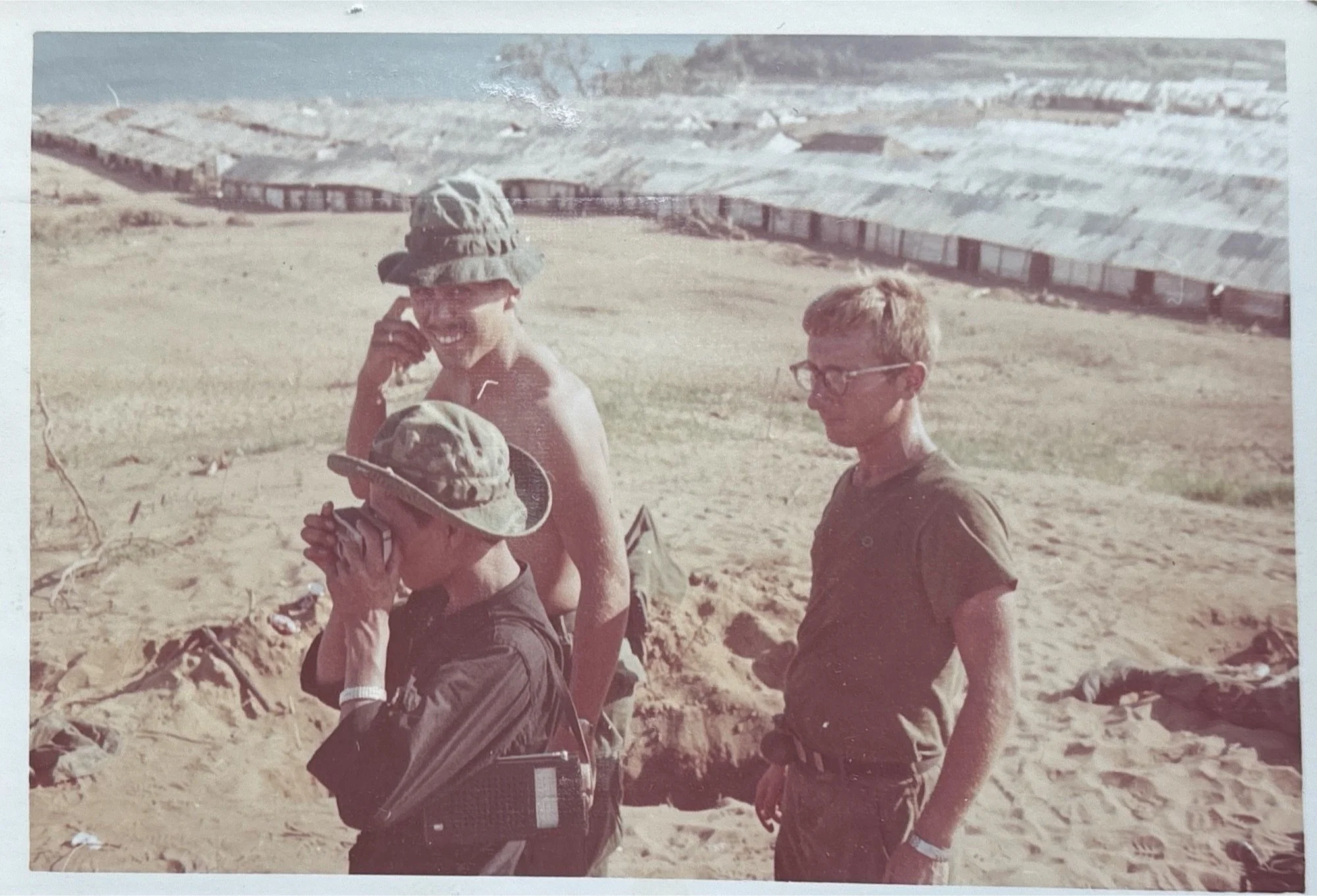

Rodger having a beer after returning from the field, 1969. Courtesy of John Hollmann.
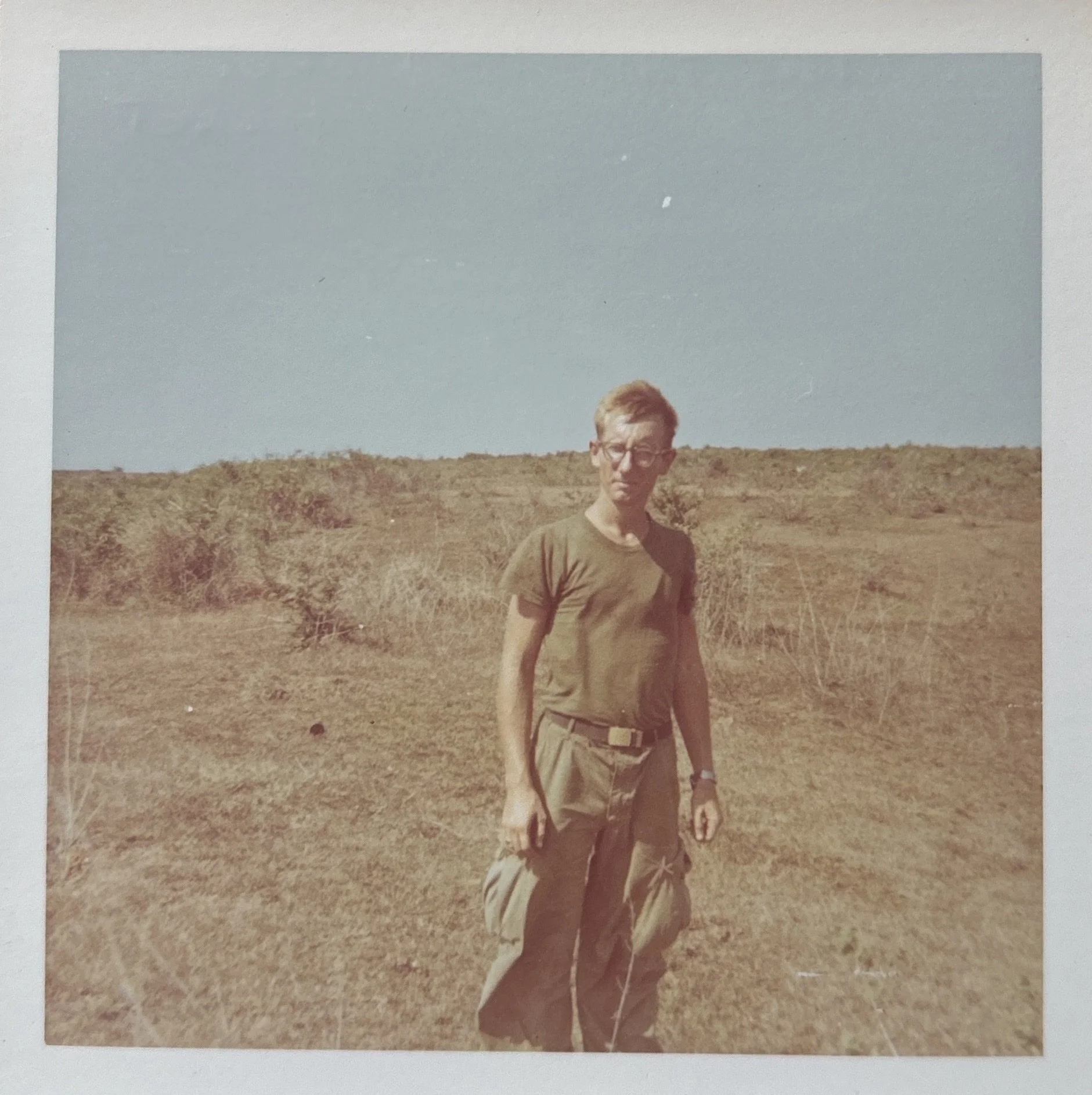
Photos of Rodger in Vietnam, 1969.

Rodger taking a break in the field, 1969. Courtesy of John Hollmann.
“The phone rang early in the morning. I don’t know how early, it was still dark and we were still in bed. We were early risers so you know it had to be very early. I was closest to the phone so I crawled over and answered it. Mom said Rodger had been killed. I remember slamming my arm and the phone down hard on the nightstand. I couldn’t believe it.”
An emotional Carol starts to shakily recount the moment she found out Rodger had been killed in action. She adds that until now, no one has ever asked her about that moment, or about how she felt in that moment.
While Rodger has been gone since that sad day in July 1969, the memory of him and of that harrowing moment have not gone. They have stayed. They will continue to stay with her for the rest of her life.
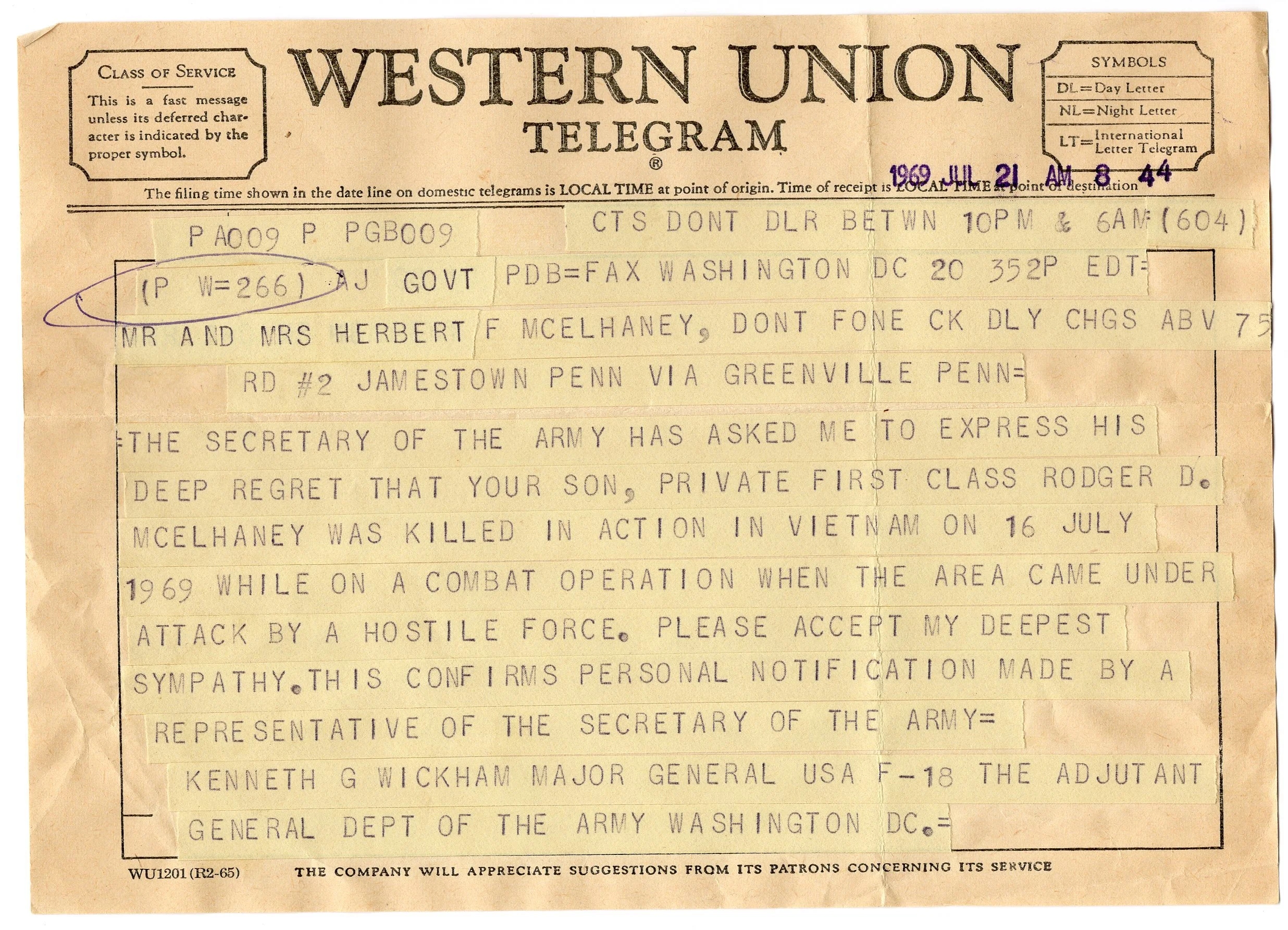
Telegram received by the McElhaney family, 1969 July 21.
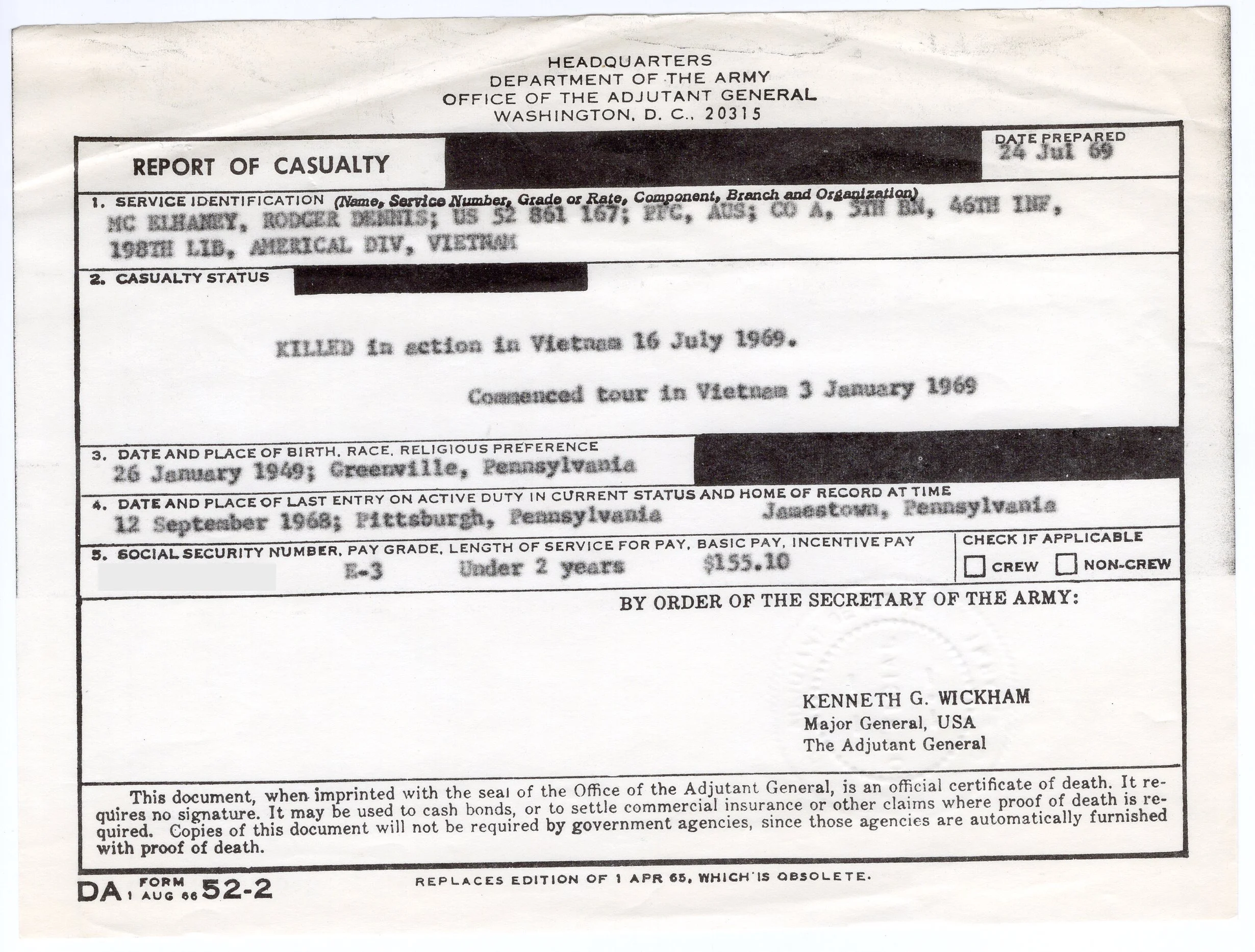
Report of Casualty received by the McElhaney family, 1969 July 24.
What Stays with Us…from the Fallout.
“I don’t remember any negative reactions with soldiers returning from the war here. I think in the smaller communities, we were just happy to get them back.”
Rodger came back, but it was not the way everyone had hoped for when he left for Vietnam. A funeral service was held at the Presbyterian Church in Jamestown. Rodger, guarded at all times by two soldiers sent by the Army, remained in the McElhaney home.
Carol remembers that the soldiers never sat down, even despite her mother’s best efforts to get them to sit and have a cup of coffee.
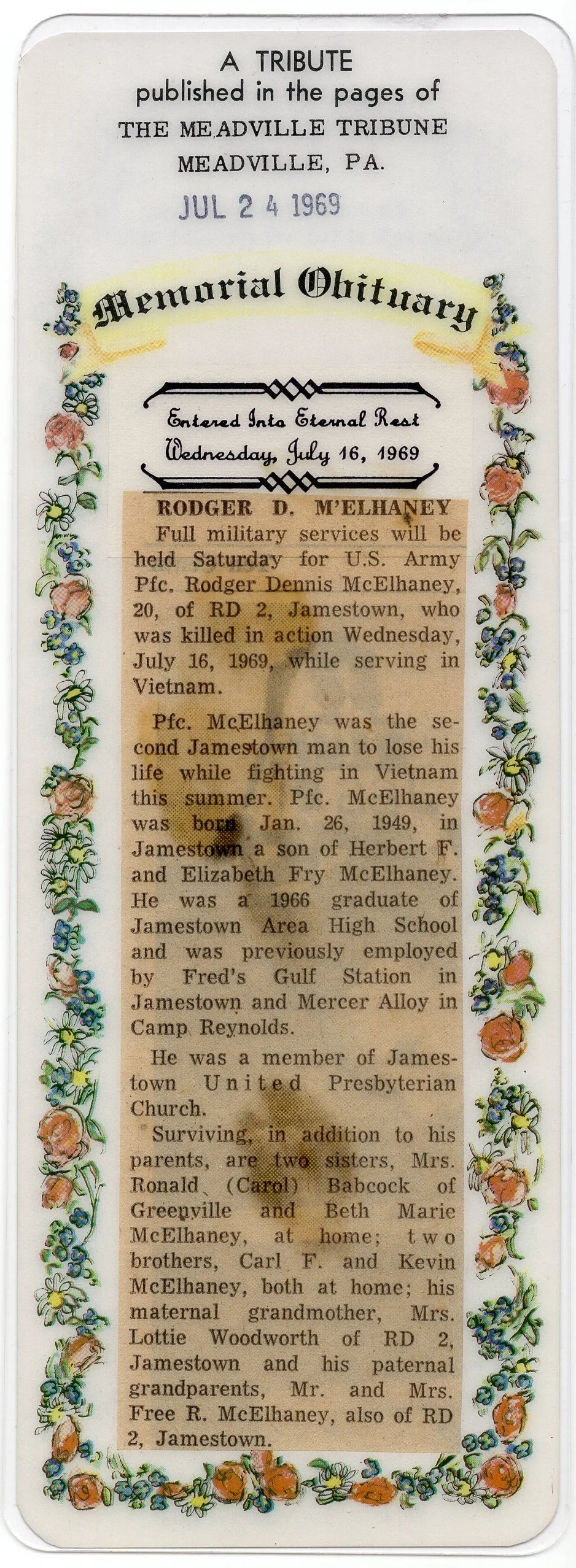
Obituary keepsake belonging to the McElhaney family.
For months after the funeral, the wound of losing Rodger stayed with the family. It kept being reopened in the form of letters returned home, unopened, that Rodger never received, in the form of sympathy letters from various Army brass and from President Nixon, in the form of personal property notices, and in the form of posthumously awarded medals.
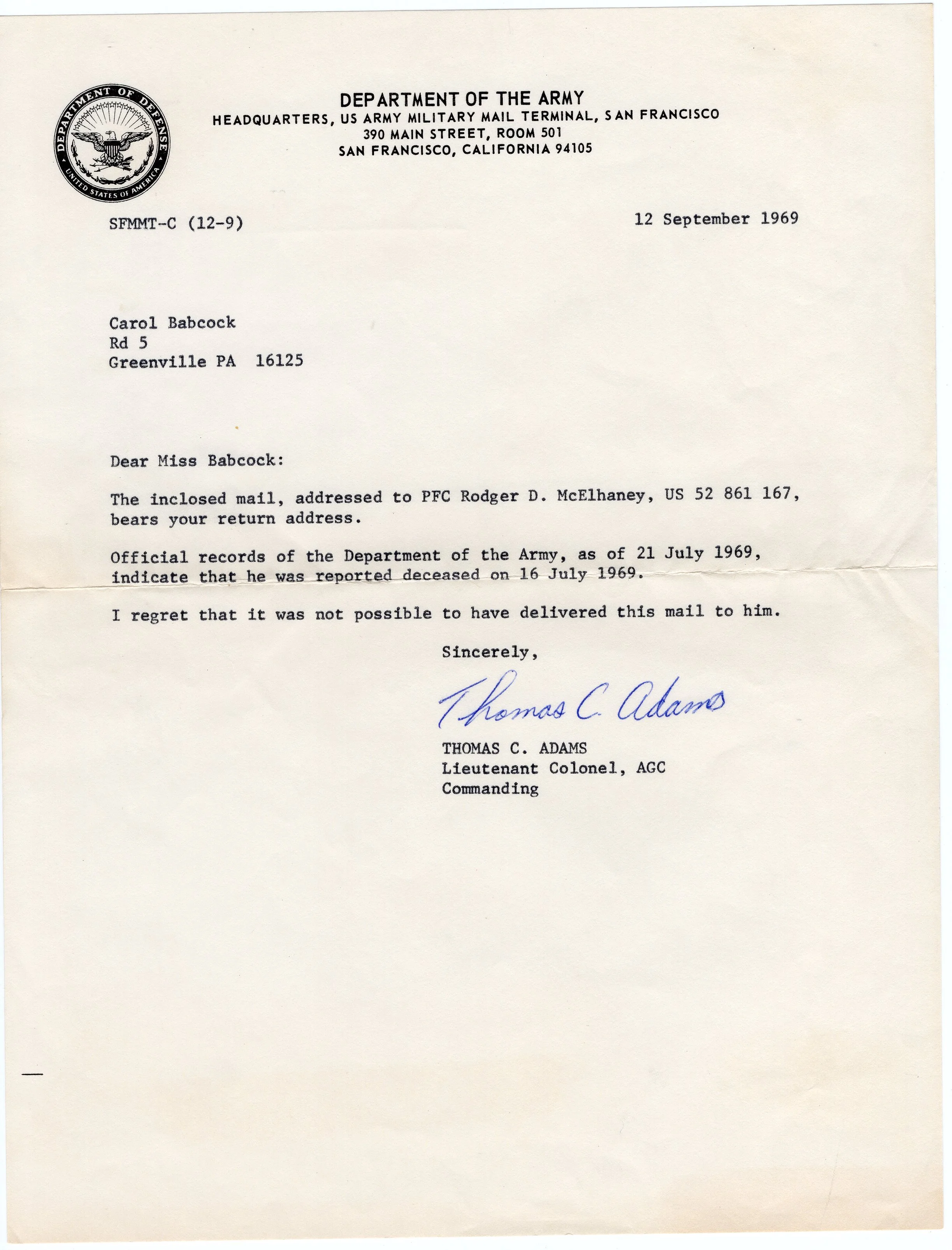
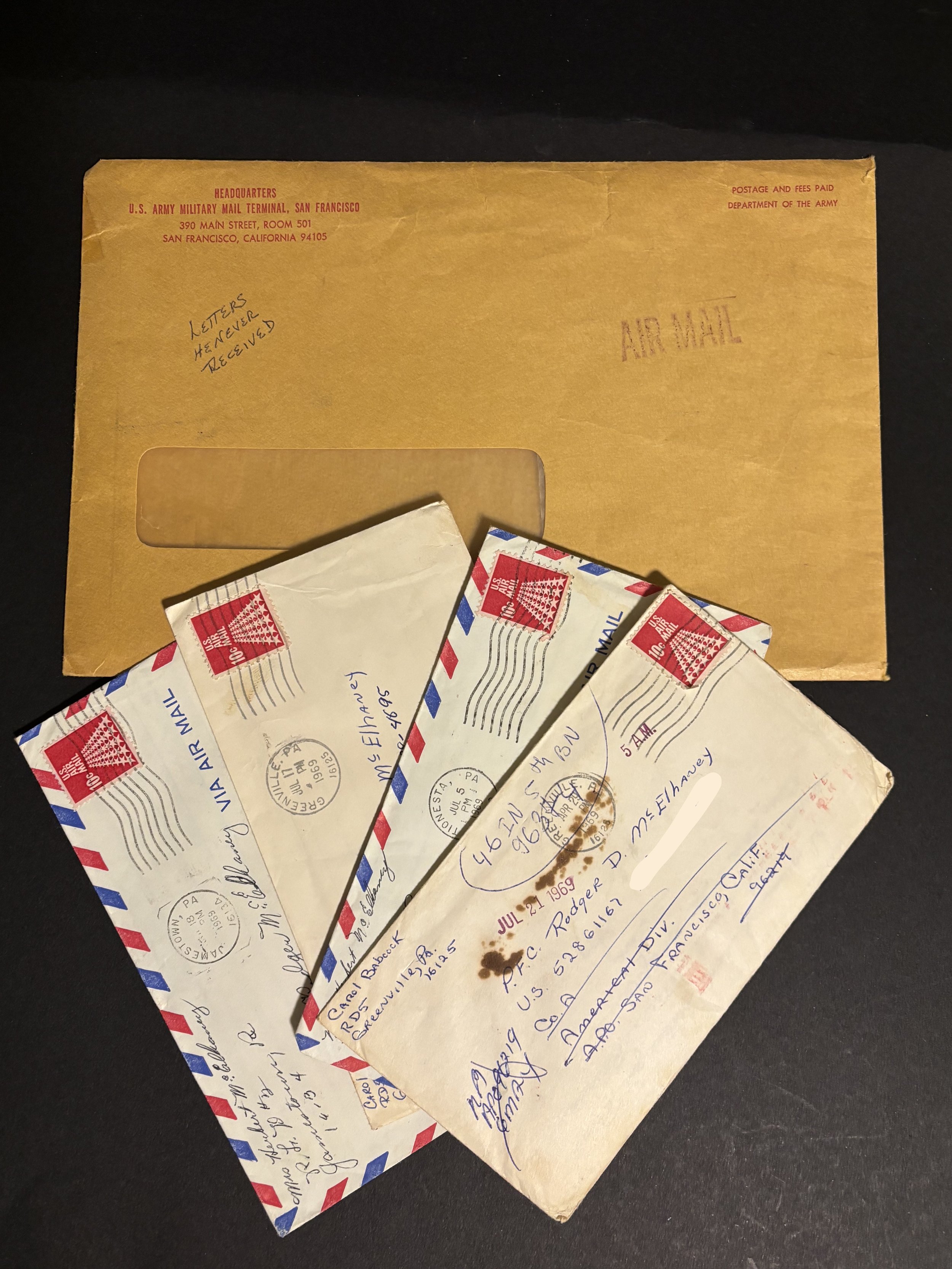
Unreceived letters to Rodger and the accompanying correspondence, 1969 September 12.
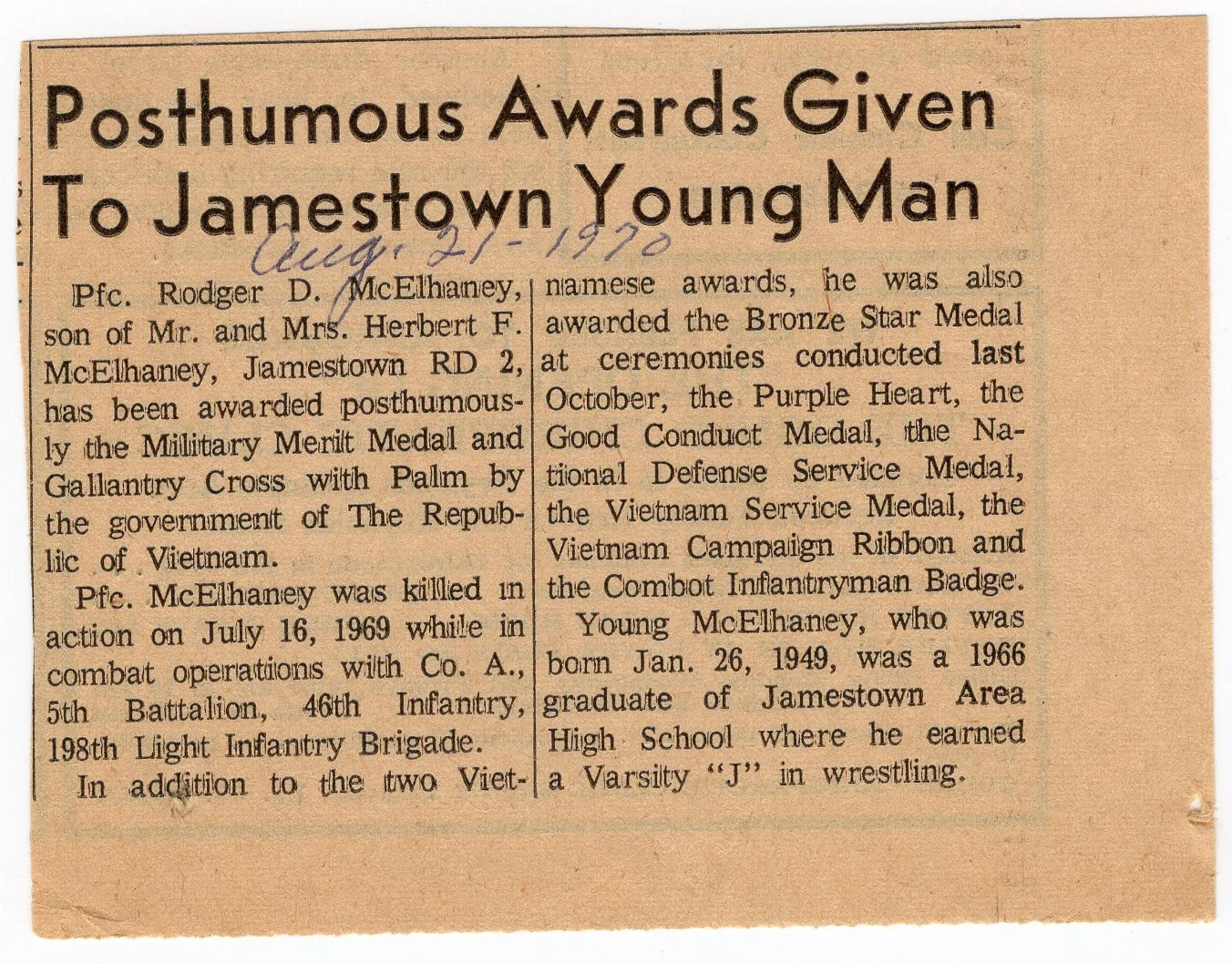
Write up for posthumous Vietnamese awards, 1970 August 21.
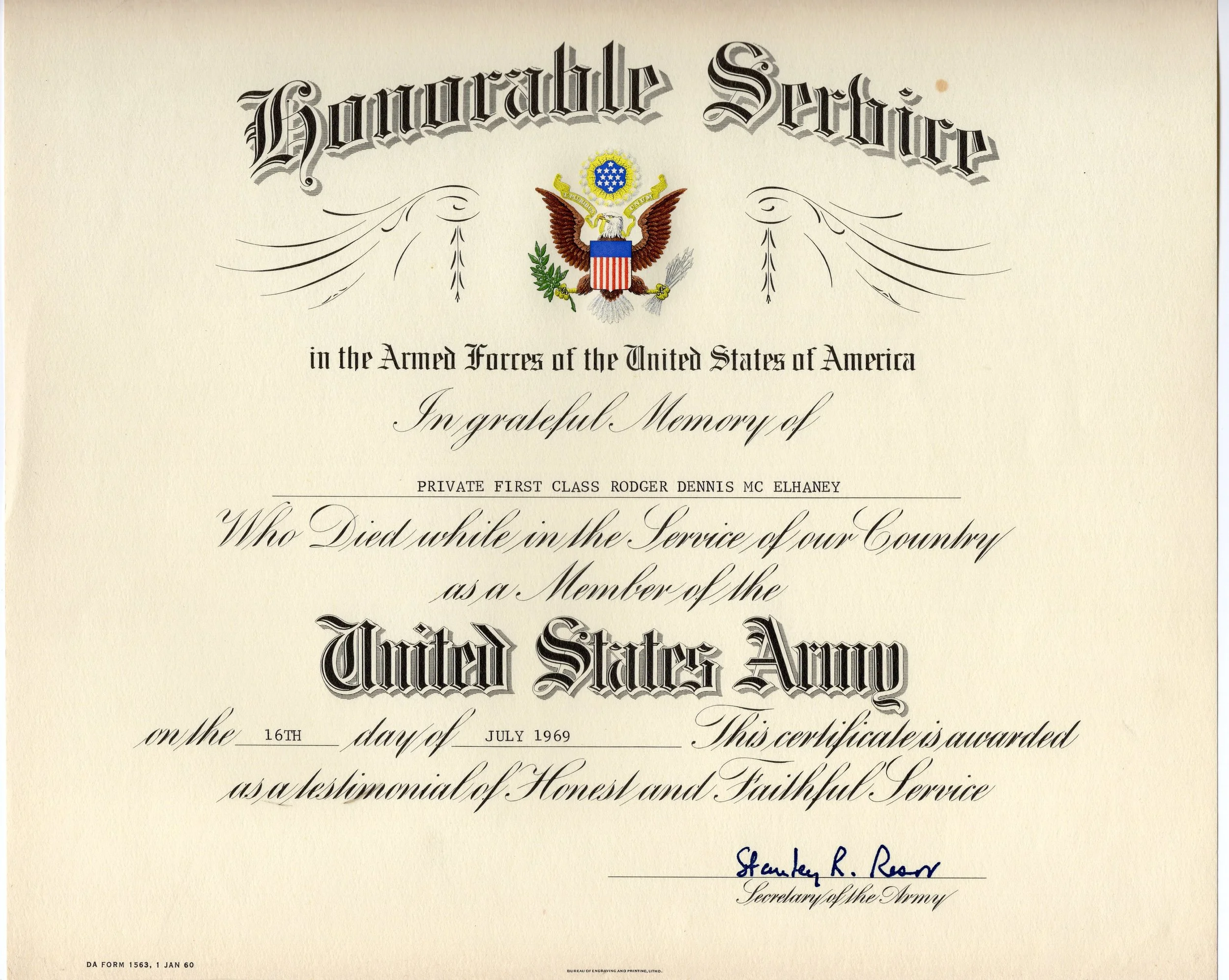
Honorable Service award, 1969 July 16.
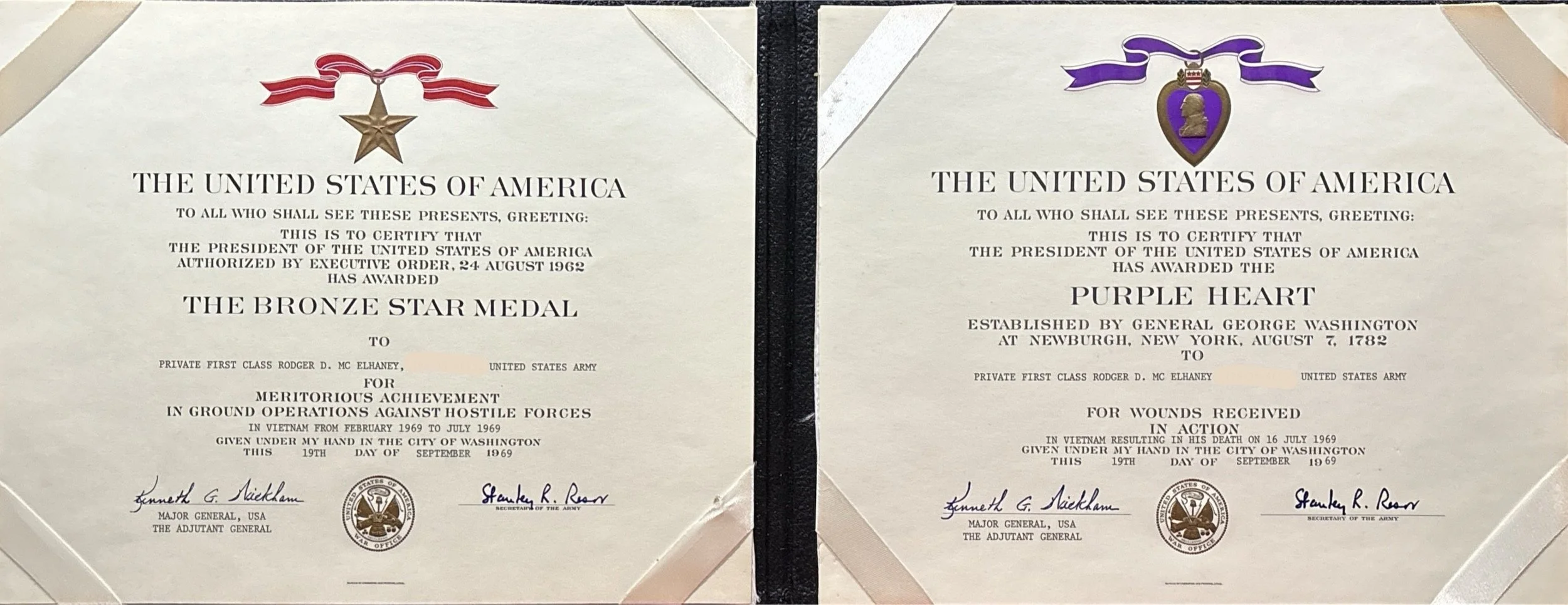
Bronze Star and Purple Heart medals, 1969 September 19.
What Stays with Us…Long After.
“Back at LZ Gator, when we’d come out of the field for a few days, Rodger and i did have a number of conversations, mostly light-hearted, and I can say that he was a truly wonderful guy — intelligent and soft-spoken and just plain nice.”
Rodger’s memory stays with his family, as well as with friends from the service who made it home.
Tim O’Brien* served alongside Rodger. Although their jobs as radio operators for different levels kept them apart in the field most of the time, Tim looks back fondly on the time they did spend together.
“All these decades later, I still dream about that day, how chaotic and scary and horrible it was, and the hollow sadness of Rodger’s death. He’s still there in my dreams.”
Sadly, as with Rodger’s family, not all memories of Rodger are happy ones for Tim. He was there the day Rodger was killed. He recounts it as being one of the worst days of his tour in Vietnam.
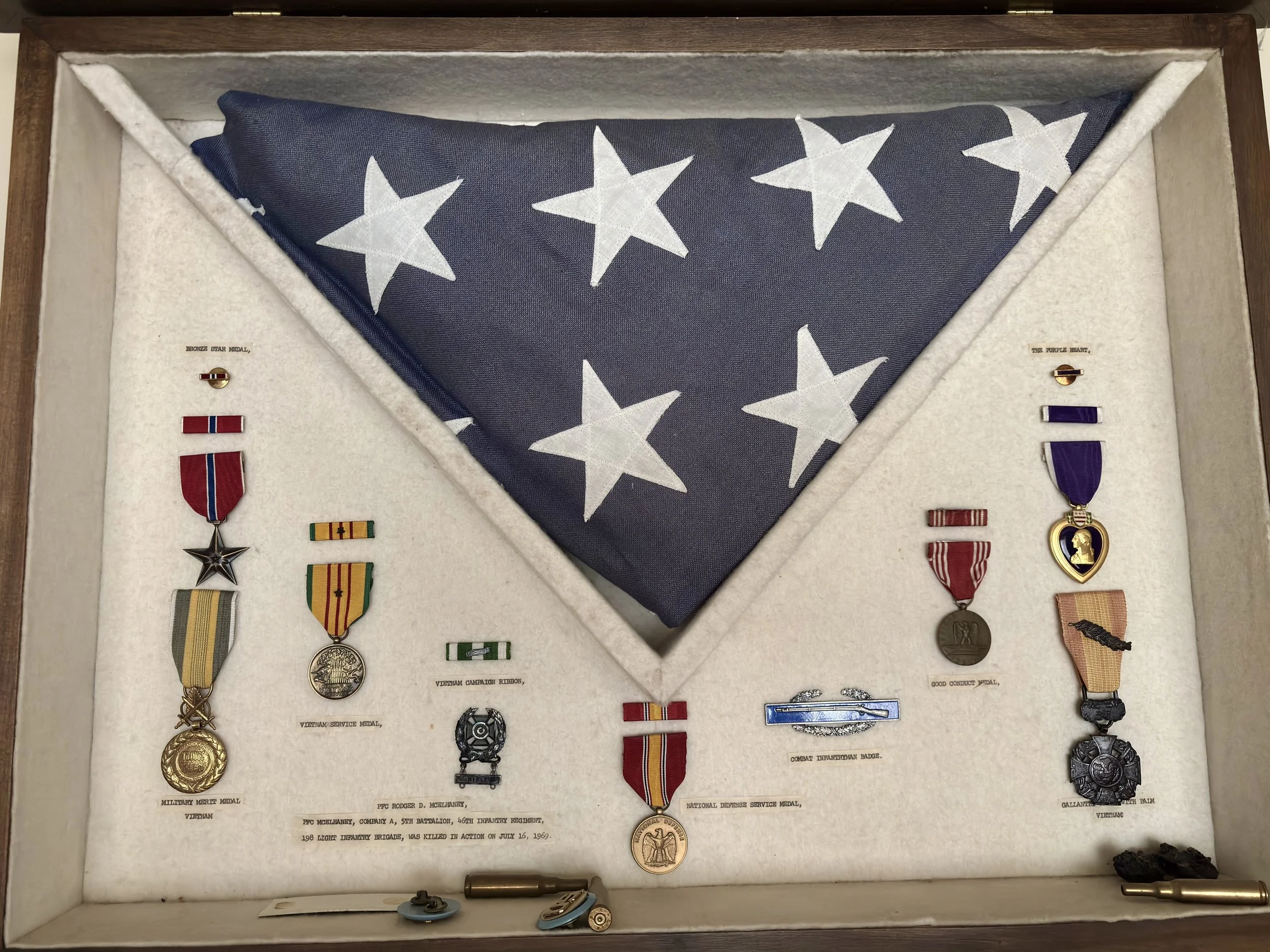
The shadow box that hangs on the living room wall of Carol and Ron’s home.
Long after a draft notice is received, a soldier’s memory stays with us.
Long after the pride of seeing them in uniform for the first time fades away, a soldier’s memory stays with us.
Long after the feeling of closeness is felt through a letter despite thousands of miles of distance, a soldier’s memory stays with us.
Long after a dreaded telegram is delivered, a soldier’s memory stays with us.
Long after sympathy letters, funeral arrangements, and the return of personal effects, a soldier’s memory stays with us.
Long after awards are given and sacrifices are acknowledged, a soldier’s memory stays with us.
Long after the collective memory of war starts to dwindle, a soldier’s memory stays with us.
Long after building and living lives of our own, a soldier’s memory stays with us.
Long after everything, we still mourn a life that should have been.
Because a soldier’s memory stays with us.**
“He was only 20 years old. He didn’t get to live the whole rest of his life.”
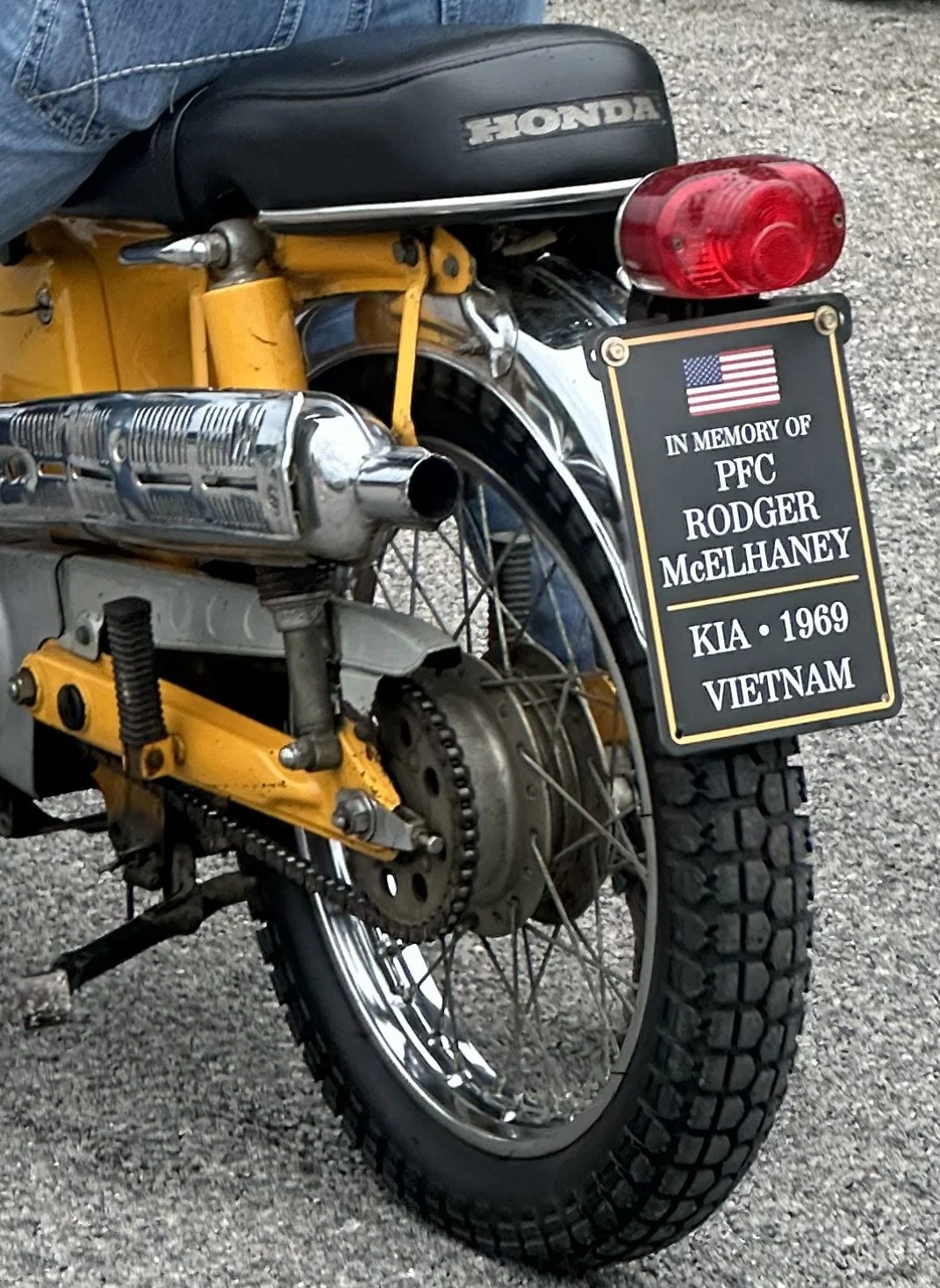
Rodger’s motorcycle, driven by Carol’s grandson in the Jamestown Community Fair parade, 2026 September 12.
This exhibit is in honor of Rodger McElhaney and it is dedicated to all Gold Star Families.
**Written by Megan Rodgers, inspired by working with Carol Babcock and the Rodger McElhaney Collection.
Related Materials
Please refer to the materials below for further information on Rodger and his military service.
View: Collection Metadata (.csv)
*Tim O’Brien is the author of several books about the Vietnam War and is the subject of the documentary titled The War and Peace of Tim O’Brien. More about Tim can be found here: https://www.timobrienfilm.com
Digital Exhibit curated by: Megan Rodgers, MLIS
Materials featured in this exhibit are shared for historical preservation, educational use, and remembrance. Please respect the integrity of the collection and do not reproduce or redistribute without permission.
Digital exhibit and preservation work © 2026 Off-Script Archiving, LLC.